
Procurement
Calculating Bakery Cost per Serving for a Cafe Menu
Calculate bakery costs using saleable portions, handling costs and unsold servings before setting a cafe menu price.
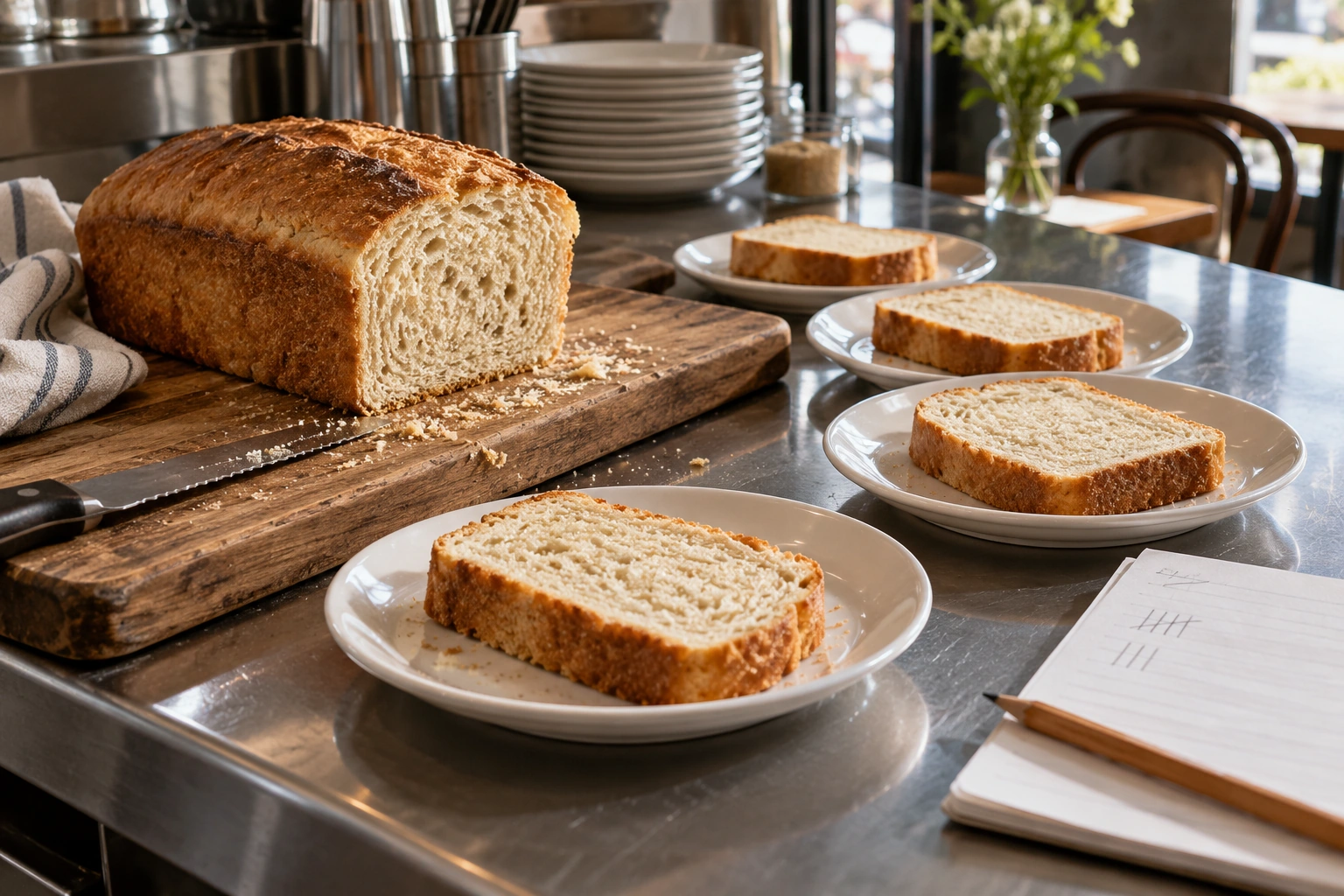
The price of a whole bakery product does not tell a cafe its bakery cost per serving. Saleable slices, delivery allocation and unsold portions all affect the result. A useful calculation starts with what can actually appear on the menu, then compares that yield with what customers buy.
Begin with one product and one selling period. The amounts below are planning examples, not Asa Group prices or quotations. Replace every amount with the cafe’s own purchasing and sales records. Counting portions from an assumed cutting diagram alone can hide a substantial difference between the purchased product and the servings available for sale.
Define the serving before calculating
Imagine a cafe purchases one whole product intended to provide twelve slices. Test the cut using the equipment and plates that staff will use in daily service. Check whether each portion meets the menu standard, rather than simply whether a knife can divide the product into twelve pieces.
If two end pieces do not meet that standard, the saleable yield is ten servings. Divide the cost by ten even though the purchase remains one whole product. Conversely, an end piece that genuinely meets the agreed serving standard does not automatically need to count as waste.
Record a target size or weight where useful. This helps staff compare different days and identify oversized slices. Do not quietly reduce the portion merely to improve the cost figure: customers also need a consistent experience when they order the same menu item again.
Collect the costs that follow the product
Start with the purchase amount after discounts actually received. Add a reasonable allocation of delivery, serving packaging and accompaniments actually used. Identify what the invoice already includes so the same cost is not counted twice.
Suppose the product costs Rp120,000, allocated delivery is Rp12,000, and packaging plus accompaniments for ten servings cost Rp8,000. The example’s direct cost totals Rp140,000. With ten saleable portions, direct cost is Rp14,000 per serving.
Delivery allocation needs a clear basis. When one delivery contains several products, charging the entire delivery to one loaf can distort the comparison. Choose a suitable basis such as quantity, value or handling requirements, and keep it consistent when comparing another product or purchasing period.
Separate saleable yield from actual sales
Ten portions ready for service do not guarantee ten sales. To understand the effect of leftovers, divide the same direct cost by actual portions sold. Using the example above gives the following results.
| Example outcome | Portions used as divisor | Average direct cost |
|---|---|---|
| All saleable portions sold | 10 | Rp14,000 |
| Nine portions sold | 9 | About Rp15,556 |
| Eight portions sold | 8 | Rp17,500 |
This table allocates Rp140,000 across sold portions. It does not provide permission to extend a product’s use limit. Record leftovers, the reason they remained and their handling according to the product information. Do not assume that everything unsold can automatically be offered again the following day.
Look beyond direct costs
Direct cost helps compare menu choices, but it does not represent the entire cost of running a business. Staff time, energy, rent, equipment, payment charges and relevant taxes also matter when setting prices. Their allocation depends on the business’s accounting approach and operating circumstances.
The Indonesian education ministry’s Bakery teaching material discusses costing in bakery production. A cafe buying finished products should apply cost recording to the components it actually bears. It should not add the manufacturer’s raw ingredients again on top of a finished-product purchase price.
Keep margin and markup separate in the worksheet. Adding a percentage to cost is different from earning that percentage of the selling price as margin. Before approving a menu price, make sure the decision maker understands which calculation the worksheet presents.
Test changes the cafe can actually make
If cost per sold serving seems too high, investigate the cause. Is the purchasing quantity excessive, cutting inconsistent, or delivery timing poorly matched to demand? These questions suggest more useful actions than immediately looking for the cheapest available product.
Test one change during a defined period: a smaller purchase, a different service time or a more consistent cutting standard. Compare saleable yield, portions sold and leftovers with the previous period. Note changes in customer demand too, so a busier day is not mistakenly credited to a new cutting method.
For discounts or drink bundles, record both the revenue adjustment and the accompanying costs. A bundle that sells quickly may still produce a weaker result when its reduced selling price and extra ingredients are included.
Bring comparable figures to the supplier discussion
Prepare a short record of the purchased unit, tested yield, order quantity, required delivery timing and handling constraints. It supports a discussion about product suitability instead of a conversation limited to the lowest purchase price. Compare alternatives using the same serving standard and sales assumptions.
Continue with comparing suppliers beyond price to consider the factors outside the invoice. When discussing requirements with Asa Group, bring the cafe’s portion trial as a starting point and confirm the specifications and terms of the products actually offered.