
Operations
FEFO for Bakery Stock: Deciding Which Lot to Use First
Apply bakery FEFO by checking lot eligibility, use limits and picking order before products enter service.
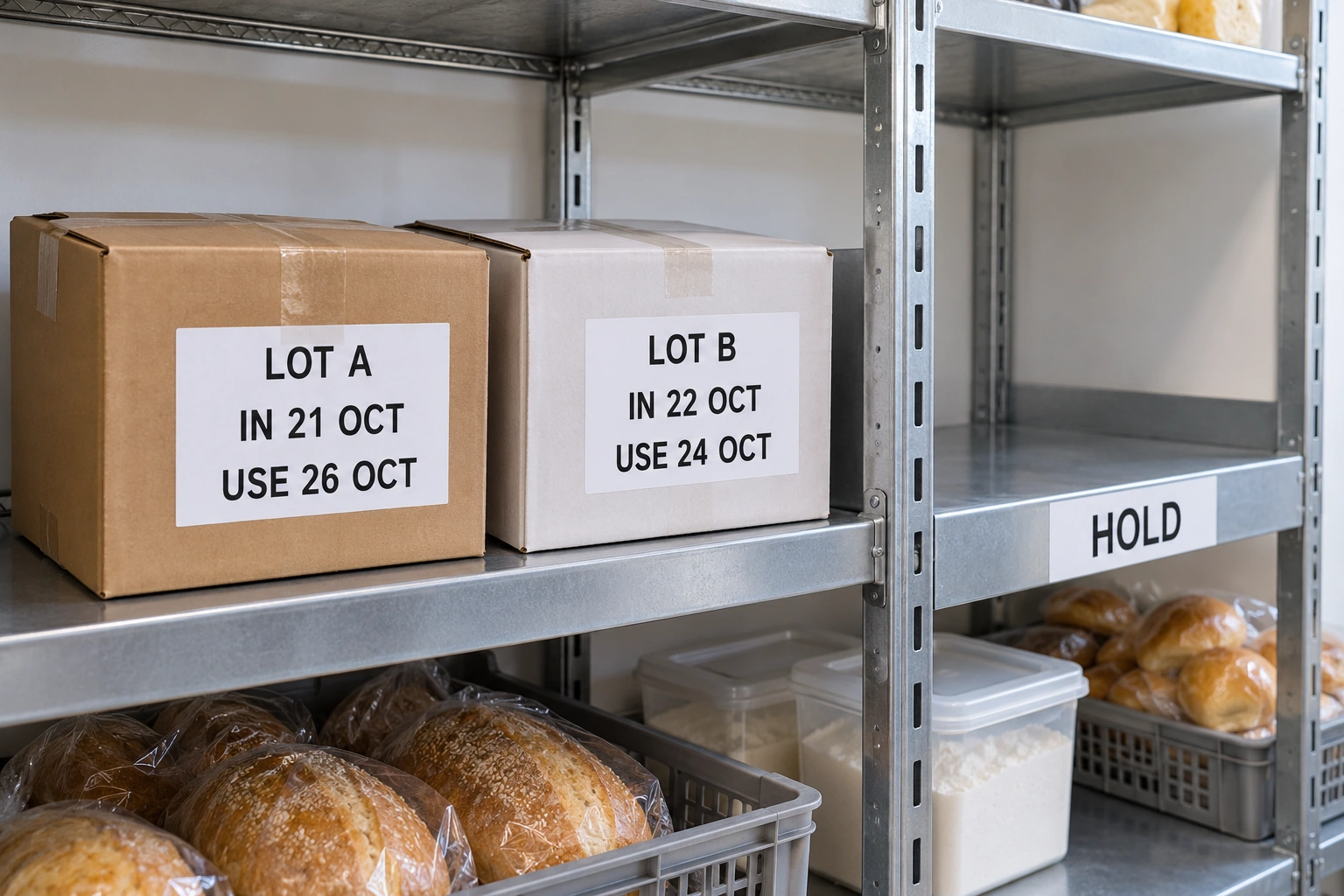
FEFO in bakery inventory helps identify which lot should be used first according to its applicable use limit. That order can differ from delivery order. An earlier date becomes relevant only after the product is eligible for use under the relevant information and handling procedures.
A practical system can begin with lot cards and shelf positions. What matters is a clear connection between the goods, the correct date, their eligibility status and the person picking them. Without that connection, a FEFO sign in the store room can turn into a habit of taking whichever package happens to be closest.
Record an identity that follows the lot
At receiving, retain the product and lot identity shown on the packaging or supplier documentation. Record quantity, arrival date, the applicable use limit and receiving condition. Avoid replacing the supplier’s lot identity with a nickname understood by only one shift.
Distinguish production dates, expiry dates and any instructions for use after opening. These do not necessarily mean the same thing. If the information is unclear, ask the supplier before choosing a picking order. Do not create a date based on assumptions about another product.
Odoo’s FEFO documentation shows that inventory systems can use a removal date set before expiry. Agree which date field the team follows, and apply that meaning consistently across physical cards and software. A correctly sorted list is useful only when everyone understands what its date represents.
Compare expiry limits, not delivery order
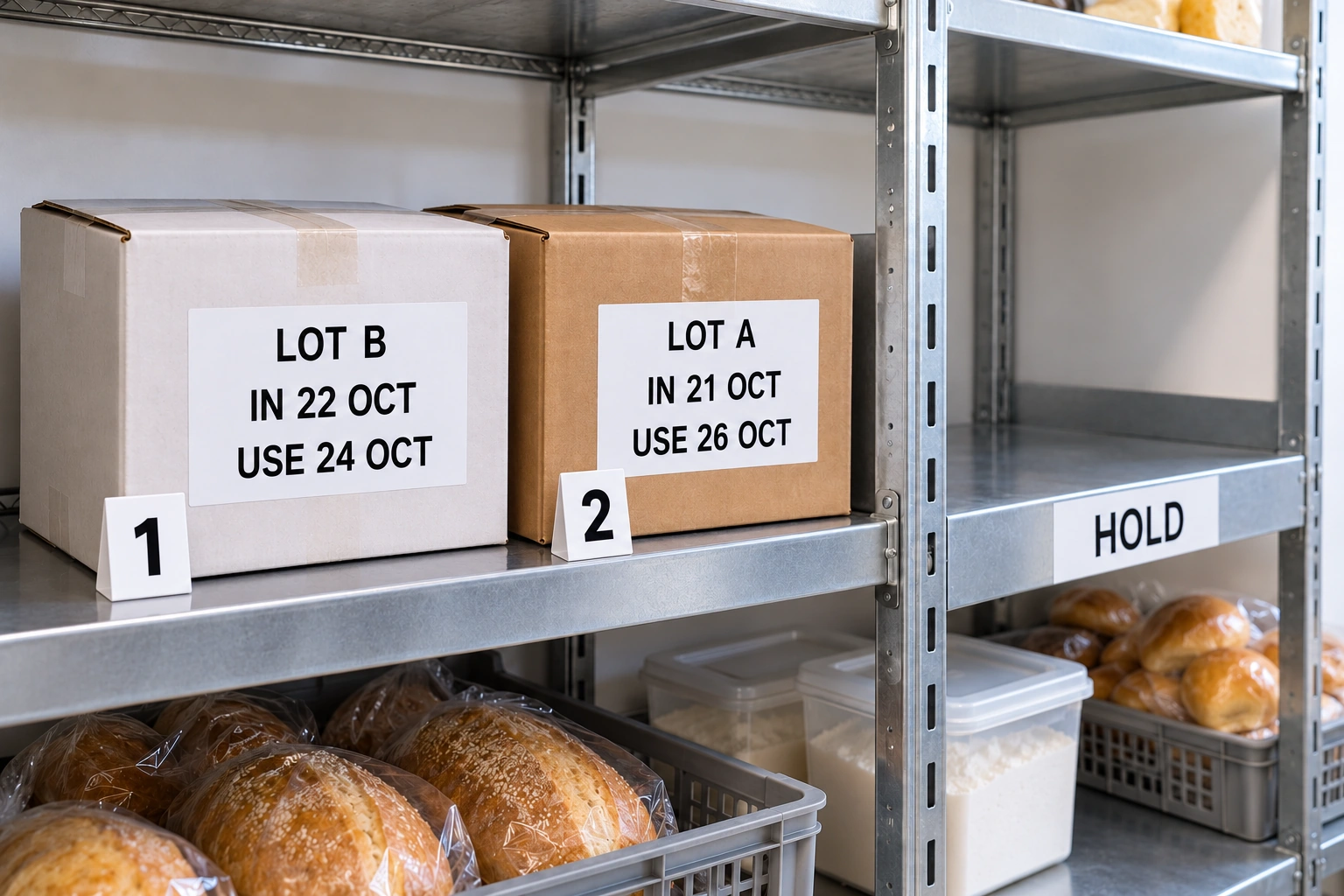
Consider two hypothetical lots. Lot A arrives on 21 October with a use limit of 26 October. Lot B arrives on 22 October with a use limit of 24 October. If both are eligible and their handling instructions are equivalent, Lot B comes first in the use order.
The example shows why FEFO differs from simply taking the earliest arrival. These dates explain ordering; they are not a statement about Asa Group product shelf life. Actual limits must come from valid information for the individual product.
Arrange the picking position so staff can locate the priority lot easily. Labels should be readable from the picking side without opening the packaging. When two lots have the same relevant limit, use an agreed secondary rule, such as receiving order, so staff do not have to make a fresh guess each time.
Separate lots that must not be used
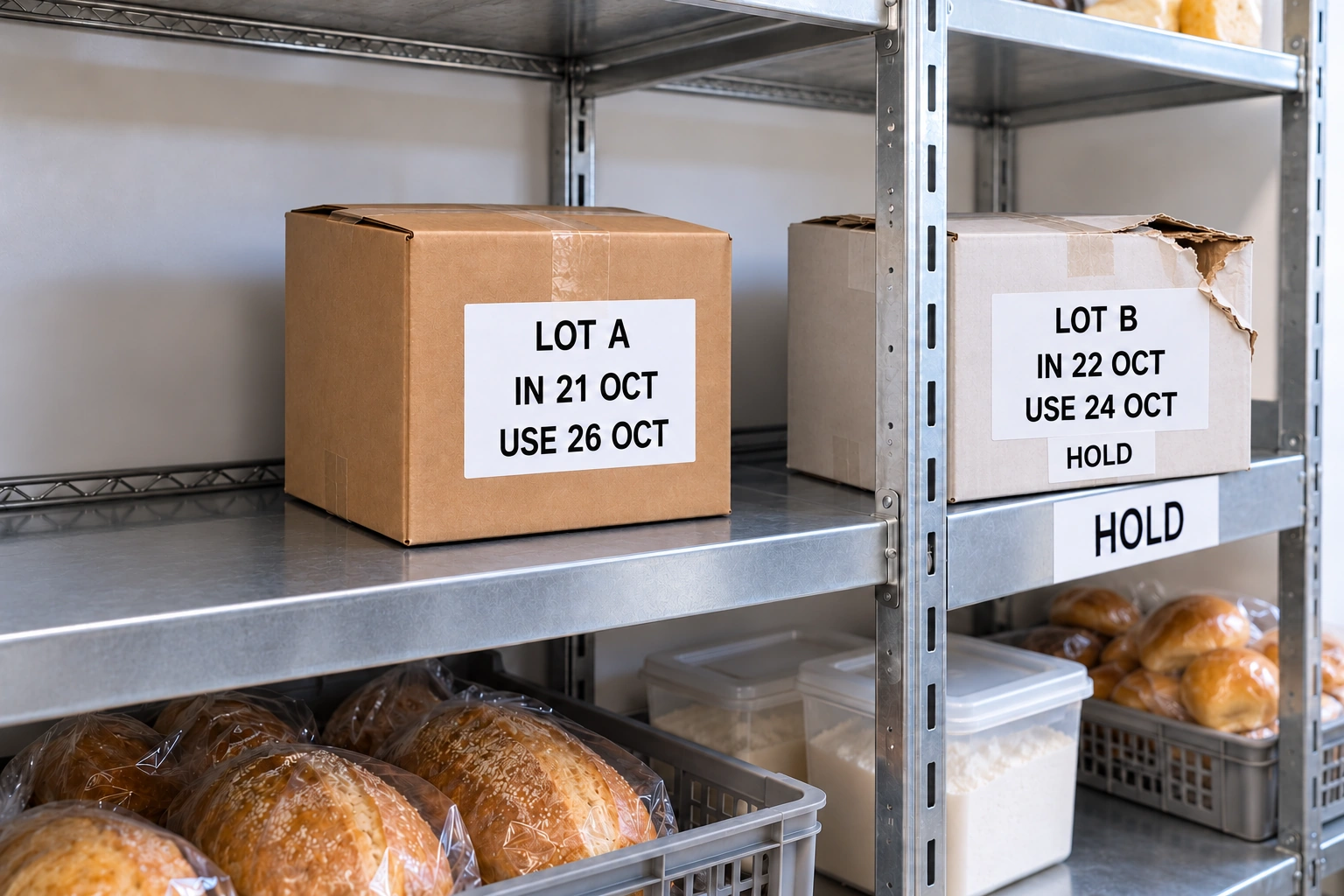
Now suppose an inspection finds damaged packaging on Lot B. Place it on hold according to the cafe’s procedure and separate it from eligible stock. The closest expiry does not authorise its use.
Record the held quantity, reason, discovery time and person responsible for follow-up. Where software is used, the physical and digital statuses should agree. A shelf marked hold is insufficient if the picking list still sends staff to the same lot.
Uncertain stock needs a decision by an authorised person using the relevant product information. Do not return it to eligible stock without a recorded decision. The FSSAI bakery training guide includes stock rotation in bakery handling practice. Treat it as general background rather than a substitute for product instructions or applicable local requirements.
Keep lot identity through service preparation
Errors often appear when outer packaging is removed and products move to another container. Maintain the link between that container, its lot identity and handling information. Avoid combining two lots in one container without a reliable way to trace the contents.
For opened products, follow the after-opening instructions actually supplied. An opening record helps the next shift understand the product’s condition, but writing that record does not extend its expiry. If the business applies a stricter internal limit, communicate that rule before staff start work.
Record withdrawals by lot sufficiently to understand the remaining quantity. The record can be simple, but it should be made while corrections are still practical. Reconstructing a week’s withdrawals from memory can create a tidy spreadsheet that no longer matches the shelf.
Use leftovers to improve purchasing
At the end of a period, identify lots that repeatedly approach their limit unused. Check order quantity, pack size and whether deliveries match menu demand. FEFO supports rotation; it cannot resolve excessive purchasing by itself.
Compare receipts, withdrawals, holds and remaining stock for one product first. If the numbers do not balance, investigate container transfers and unrecorded picks before assuming a supplier error. One confirmed cause is more useful than adding numerous fields without changing the work.
At shift handover, explicitly point out the priority lot and any stock on hold. Give the incoming person a chance to compare the record with the actual goods. That short check can reveal a detached label or stock returned to the wrong position.
Start with one manageable shelf
Choose one product, make lot identities visible and follow a complete receiving-to-picking cycle. Check whether two different people select the same lot using the available information. Expand to other products only after the process is understood, retaining each product’s own handling requirements.
Read designing product storage and handling to connect rotation with the wider cafe workflow. When discussing supply with Asa Group, confirm the lot and handling information the team needs before establishing its receiving rules.