
Operations
Bakery Stock on Hold: Record Physical Items Before Release
Bakery stock on hold is physically present and needs to stay out of the available count until someone makes a release decision.
Bakery stock on hold is physically present and needs to stay out of the available count until someone makes a release decision. Record the quantity, unit, lot, location and person authorized to change that status. Staff preparing a menu or stock transfer can then avoid using goods that are still under review.

Separate physical stock from allocatable stock
Imagine an outlet receives six cartons. Five can go into the available list, while the identity of one needs checking. The receiver has seen six cartons, so physical stock is six. The team preparing products can plan for five while the last carton is held. Use consistent terms on the shelf and in the inventory record.
A receiving record can separate quantities arrived, available and on hold. Check that all three use the same units. If orders specify packs while the receiver counts cartons, record the conversion that applies to this lot. A different carton type may look similar while holding a different count.
Inventory systems can distinguish stock that is physically present from stock blocked for outgoing transactions. That distinction remains useful for an outlet using a worksheet and shelf tags. The chosen status names and release process should reflect its operating arrangements. Microsoft Learn on inventory statuses
Separate location and status
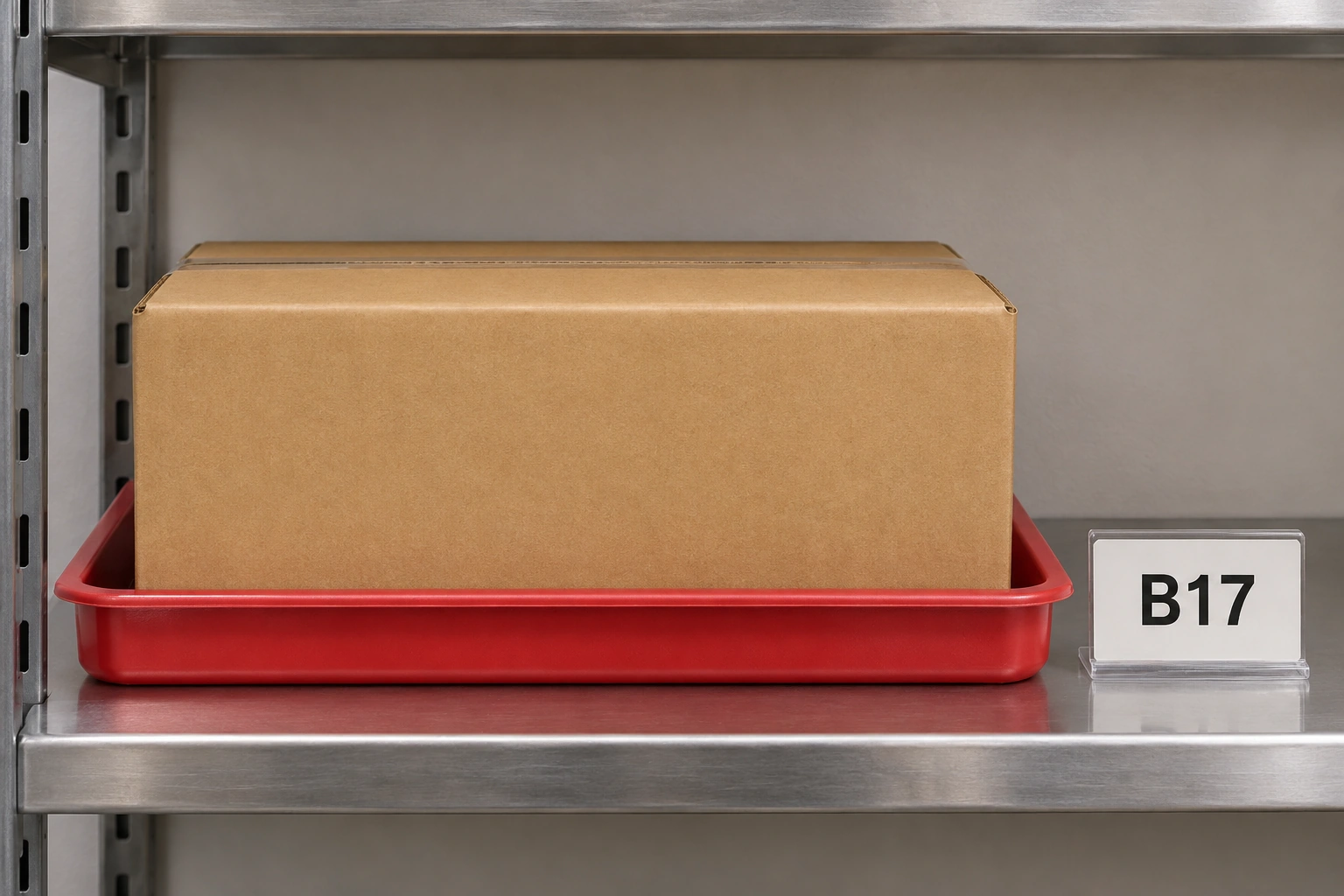
Choose a place the next shift can identify. In a simple example, carton B17 is set aside in a designated location with an identifier linked to its receipt. The tray makes that position visible. Follow your authorized holding location and the product handling requirements that apply at the workplace.
Update the record when the change happens. If a carton is moved at 09:10 and the system is updated at noon, someone taking an order may see a different status from the person looking at the shelf. Capture the time and person responsible for each step. If the physical move has to wait, the existing location and access restriction should be clear to the staff involved.
Use a reference that distinguishes the carton under review from similar products. A product code may be insufficient where several lots sit on the same shelf. Include lot, quantity, unit, receipt reference, observed condition and temporary location. A linked photograph can help identify the label. Keep a written reference your colleagues can read without opening the image.
Say who can release the stock
A hold record should make the next action evident. Who checks the lot? What evidence is required? When should the outlet follow up? Leave the decision field open while the answer is pending. Someone reading the record should still be able to tell that the stock is unavailable for allocation.
For example, the supplier may send a document showing that code B17 corresponds to the order. That can resolve the identity question. The authorized owner still decides if another check is required before release. Separate the evidence received from the decision made so the sequence can be traced.
The outcome could be releasing the whole carton, releasing only an independently verified quantity, or arranging a return under agreed procedures. Keep the history of the hold after the goods move again. Record the decision time, affected quantity, approver and supporting reference.
Reconcile movement at shift change
Say the morning record lists six cartons physically present, five available and one held. Two available cartons are then used. The next record shows four physically present, three available and one held. If the held carton is later released without leaving the outlet, physical stock remains four and available stock becomes four. The status changed without a new receipt.
A release recorded as a receipt gives a misleading result. The team would see five physical cartons while the shelf holds four. Identify whether the staff action moved a location, changed availability or added or removed stock. One action can have several consequences, but each one needs its own record.
At shift handover, ask how much is physically present but unavailable, where it is, and which decision or evidence remains outstanding. If the record does not answer those questions, close the gap before incorporating that quantity into an order or production plan.
Connect the hold to lot history
Use the product and lot traceability guide to maintain the link to the original receipt. Menu planners can then rely on the available figure while supplier reviewers can still see what arrived. For the next order, choose one completed case and trace how the shelf location, quantity, and approval connect in a single record.