
Planning
Bakery Lead Times and Order Cutoffs: Planning Backwards
Plan a bakery order backwards from use and receipt dates, confirmed supplier cutoffs and internal approval deadlines.
Lead time describes the interval needed to fulfil an order, while an order cutoff is the latest point at which an agreed ordering stage can be processed. Record both alongside the time the bakery products are actually needed. Knowing only one does not give a team a usable supply calendar.

Start with the event or outlet requirement and work backwards. Keep internal plans separate from dates confirmed by the supplier. A useful calendar identifies who must make each decision, rather than simply marking a delivery day.
Work backwards from when the product is needed
Write down when the products will be used, including preparation before guests arrive or an outlet opens. The event date and receipt date need not be identical. Earlier receipt is not automatically better either: storage arrangements and product instructions still matter.
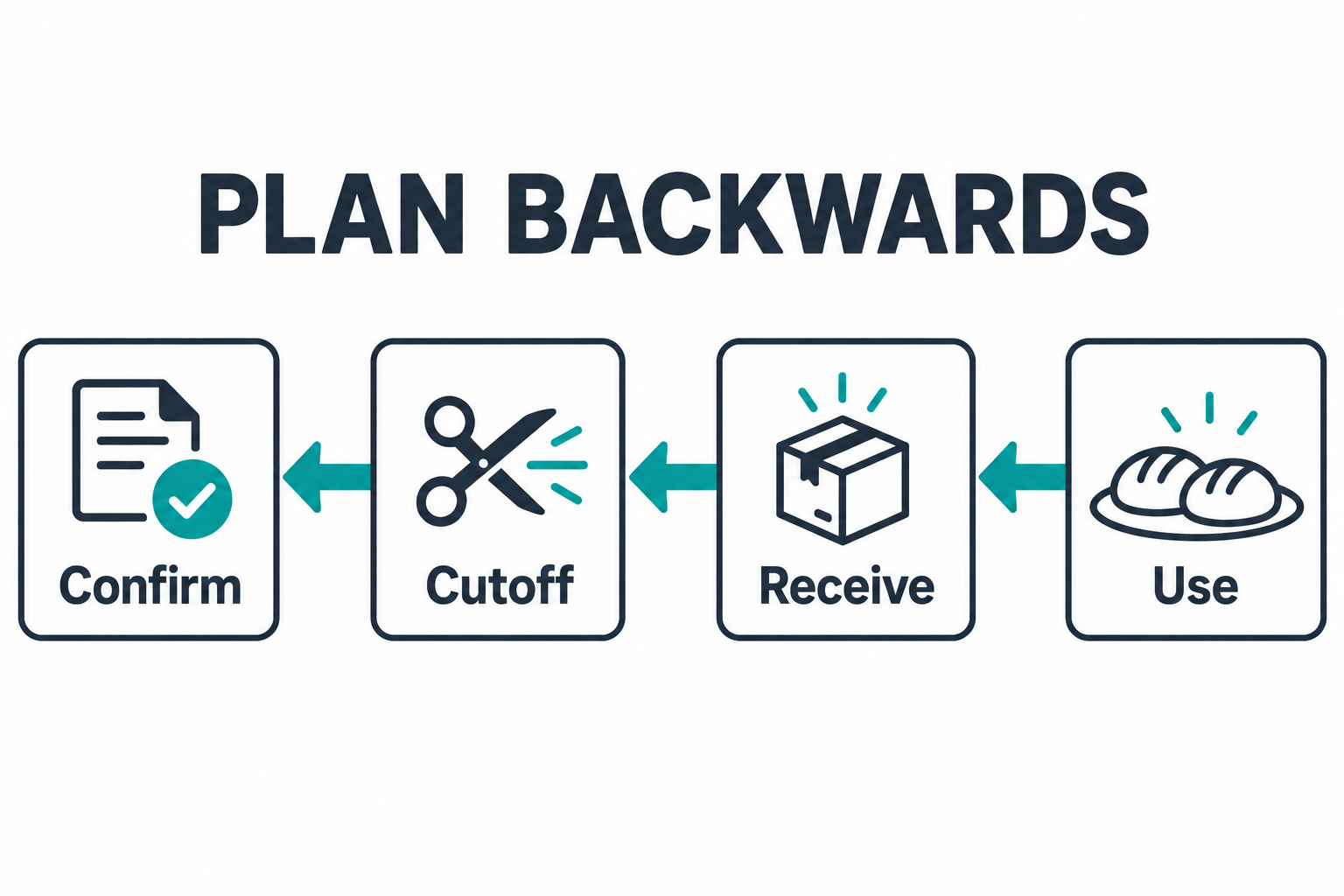
Once the time of use is clear, discuss a workable receipt date. From that point, review lead time, cutoff and approval stages. The internal calendar needs room for checking a quotation, confirming quantities and completing any required materials.
Ask whether “three days” means calendar days or working days, what time the deadline falls, and what starts the lead-time calculation. An informal message expressing interest may not be treated like a complete accepted order.
Separate four decision points
Label dates with their actual status. A date your team would like is different from a date accepted by the supplier. When both appear in the same format without explanation, another colleague may read a proposal as a promise.
| Point | Question that needs an answer |
|---|---|
| Time of use | When are products needed in the actual activity? |
| Receipt | When can someone receive the goods, and who will it be? |
| Supplier cutoff | When must the complete order meet the agreed conditions? |
| Internal approval | Who approves quantities and choices before the cutoff? |
Add an owner to every line. One person may gather information while another approves the price or a product substitution. A calendar cannot resolve a delay if each stage waits for somebody who does not know the deadline.
Build a calendar people can follow
Imagine an activity taking place on Friday morning. The team wants to receive products on Thursday and asks the supplier when the complete order must be submitted. After that date is confirmed, the team sets an earlier internal approval deadline.
This sequence avoids sending the order at an internal deadline that falls after the supplier’s cutoff. Do not assign an assumed lead time to the example and turn it into a rule for every product. Ready-made supply and custom work may require different preparation.
Keep the calendar in one shared record. Include the date, time, timezone when relevant, owner, status and confirmation source. If a call changes the information, summarise it in writing so the team retains one reference.
Ask what can change the timing
Quantity, product choice, brief completeness and receiving arrangements can affect a scheduling discussion. Ask which details need reconfirmation if one changes. A revision that seems small to the buyer may affect work already in progress.
Distinguish the deadline for a new order from the deadline for revisions. Bake Crafters’ ordering information illustrates a supplier separating those stages. It supplies a useful question to ask, not a timetable that applies to Asa Group.
When a revision arises after approval, record the request and wait for its feasibility to be confirmed. Do not replace the previous date with a new one as though acceptance has already happened. A short decision record helps explain why the plan moved.
Prepare for a late approval
A delayed decision should trigger a conversation before the cutoff passes. Possible discussions include retaining the agreed product, reviewing quantities or changing the time of need. The feasibility of each option requires confirmation rather than assumption.
Decide who contacts the supplier and who approves the consequences. Avoid several outlets independently revising the same order. One change summary makes it easier for both sides to see the latest request and what remains undecided.
After receipt, compare the plan with what happened. Was the brief late, were approvals repeated, or was the receiving person unavailable? Use those observations to improve the next calendar without treating one event as a universal conclusion about deliveries.
Test one change scenario before using the calendar: quantities remain unapproved at the internal deadline while the event date is fixed. The person gathering requirements should mark the decision as pending, identify the choices and contact the authorised owner. Do not insert a new receipt date without the supplier’s response. This tests whether the calendar supports action when something stalls, rather than merely showing an ideal plan.
For stock cadence, continue with setting a balanced reordering pattern. For a new requirement, bring the backward calendar and approval status to Asa Group. A clear schedule starts with a real need and confirmations that everyone can read.