
Procurement
Revising a Bakery Purchase Order: Identify the Version and Changed Lines
A bakery purchase-order revision should identify the document, the changed lines and the confirmation still required.
A bakery purchase-order revision should identify the document, the changed lines and the confirmation still required. Sending a change request does not establish that the supplier can fulfil the revised requirement.
Needs can change after an order leaves your desk: a meeting grows, a receiving date moves or part of the order is no longer needed. Keep every revision connected to the original order. Purchasing and receiving can then work from the same reference without treating the latest attachment as an additional purchase.
Distinguish document corrections from product changes
State whether you are correcting a typing error, changing a quantity, moving a date or altering a specification. These requests can require different reviews. An incorrect outlet name is not equivalent to replacing the contents of a previously approved product.
Where a specification or sample changes, follow the separate discussion of changes after sample approval. Do not hide an ingredient or size change inside a quantity note. The purchase order should continue to reference a specification that is actually valid for the intended goods.
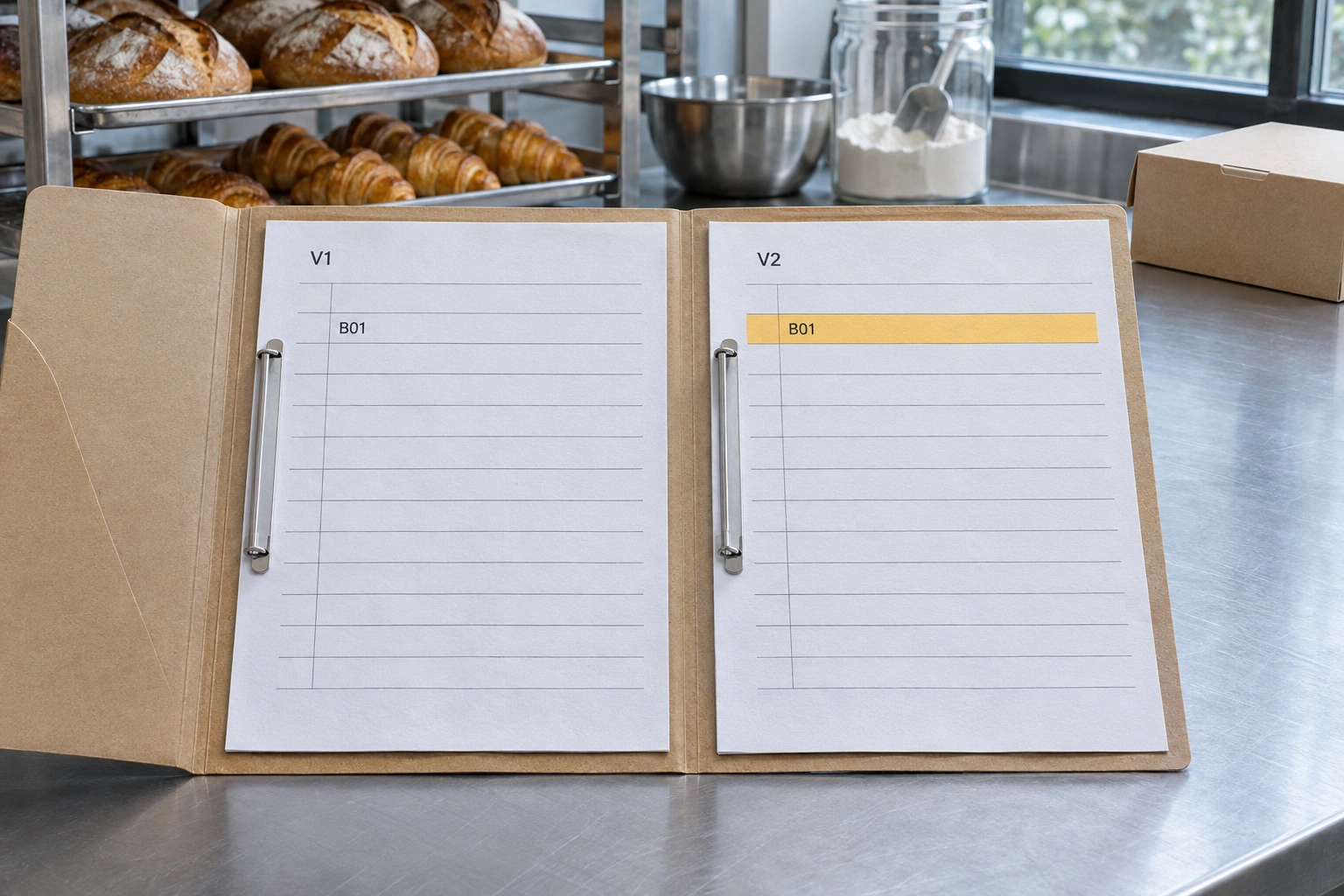
Retain the principal order number and add a revision identity according to your document process. Readers need to recognise how the original and subsequent versions relate. A filename such as “latest final” is of little use when several different attachments remain in circulation with no intelligible sequence or indication of which one governs the work.
Check the order stage before requesting a change
Ask whether the order has been confirmed, prepared, produced or dispatched. Its actual stage affects which options remain available for discussion. The ability to edit an internal spreadsheet says nothing about whether the supplier can change work already undertaken.
Describe the requirement and requested timing, then ask about the consequences. Minimum quantities, costs, preparation time and the treatment of processed goods must follow the agreement for that order. Do not assume that a previous arrangement for another product or supplier applies here.
Identify the person authorised to approve changes on your side. If several outlets contribute requests, consolidate them before contacting the supplier. Three conflicting revisions in different conversations leave the recipient guessing which decision to follow. Resolving that disagreement internally is part of preparing a workable request.
Send the complete version with a change summary
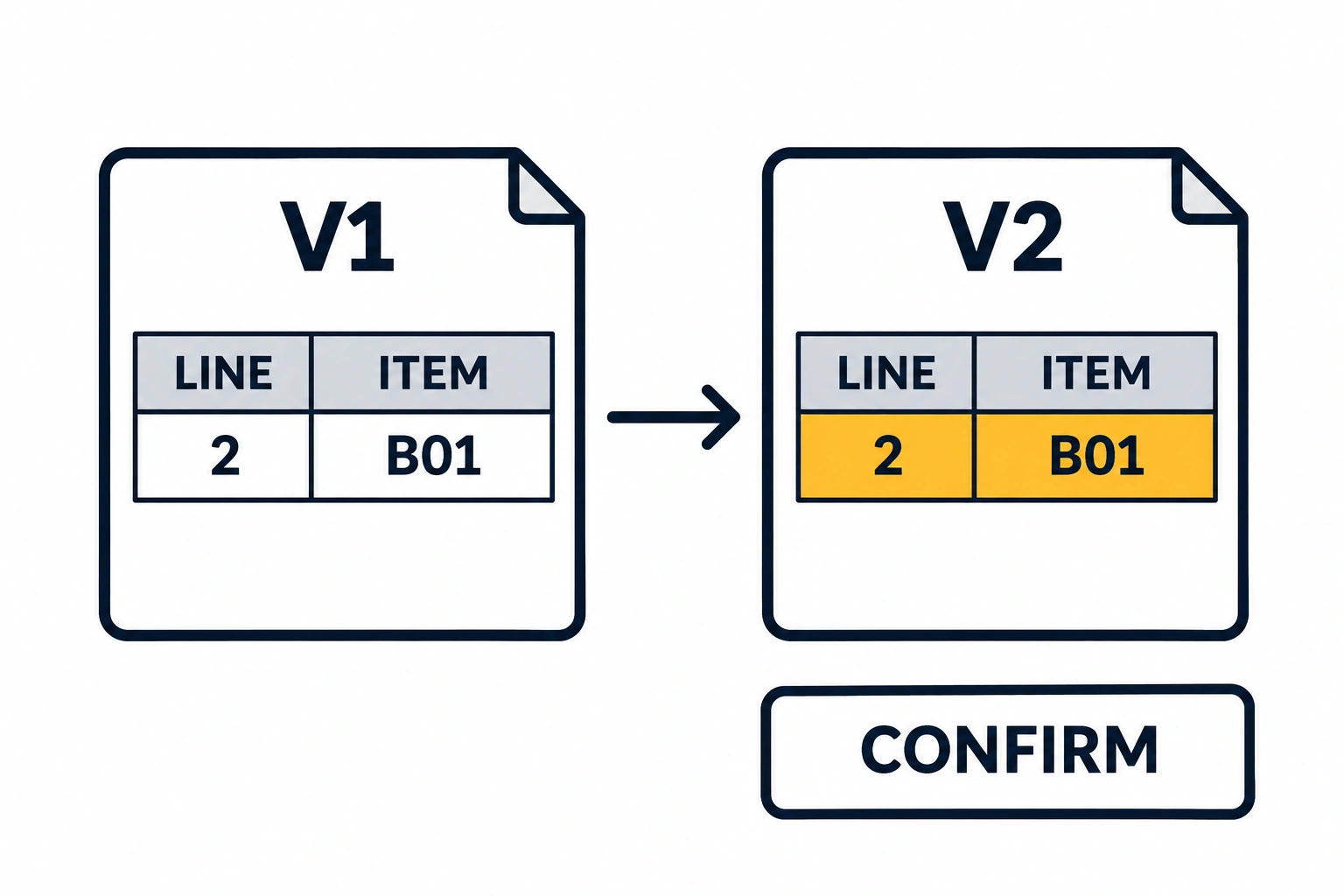
Supply a complete document so that unchanged lines remain visible. Add a short summary identifying the line, previous value, requested value and any necessary reason. Colour highlighting can assist comparison, but the explanation should remain understandable without depending on colour alone.
Keep stable product-line identities. If B01 still refers to the same product, retain that reference when changing its quantity or date. Where a line is cancelled, say so explicitly. Removing it without explanation can make a reviewer wonder whether part of the attachment is missing.
SAP’s material on purchase-order amendments treats changes as a process requiring communication and tracking. A simple coordination method can retain the relationship between versions and decisions without reproducing every feature of a purchasing application.
Separate a request from its acceptance
Use a status that says whether the revision is requested, under discussion or confirmed under the applicable ordering process. A newly sent document does not automatically replace the supplier’s working reference. Keep a response that actually addresses the changed lines, especially where only part of the request can be accepted.
If the supplier proposes an alternative, record your decision on it. A follow-up question is not approval. A clear summary identifies the version agreed by both sides, any outstanding points and who is expected to answer next. This prevents an unresolved exchange from being mistaken for a finished amendment.
Once the decision is settled, inform the relevant internal teams. Receiving staff, outlet managers and invoice reviewers may not follow purchasing conversations. They need the current reference and an explanation of the differences they will encounter, rather than an instruction to search an entire message history.
Read the effect on receiving and invoicing
A line change can affect later documents. Check whether the quantity to receive, handover date or invoicing basis needs updating. Receiving staff cannot be expected to know an explanation kept only in a purchaser’s private note. Provide the revision reference with the information needed to inspect the delivery.
Where part of the goods has already been received, distinguish that history from the outstanding portion under discussion. A revision should not erase a correct receipt. Record the treatment of the open quantity and compare subsequent documents with that decision before an obsolete version drives another dispatch or invoice review.
Retain old versions without keeping them active
Earlier versions explain why a change occurred, but several documents should not appear to be equally active working instructions. Identify the current version and retain older ones as history under the business’s document process. Receiving notes should remain understandable even when the original purchaser is unavailable.
For example, a receiving date might change for one line while the other products stay the same. The amendment summary identifies that line, retains the rest and records the supplier’s confirmation. When the delivery arrives, staff can distinguish an agreed date change from an unexplained error.
Before sending the next revision, read three things together: the order identity, the exact change and the latest decision. That combination gives the recipient something actionable, beyond an attachment with the word “revised” added to its name.