
Quality
Bakery Takeaway Containers: Checking Fit without Crushing the Product
Takeaway packaging needs to be assessed with the bakery product that will actually go inside it.
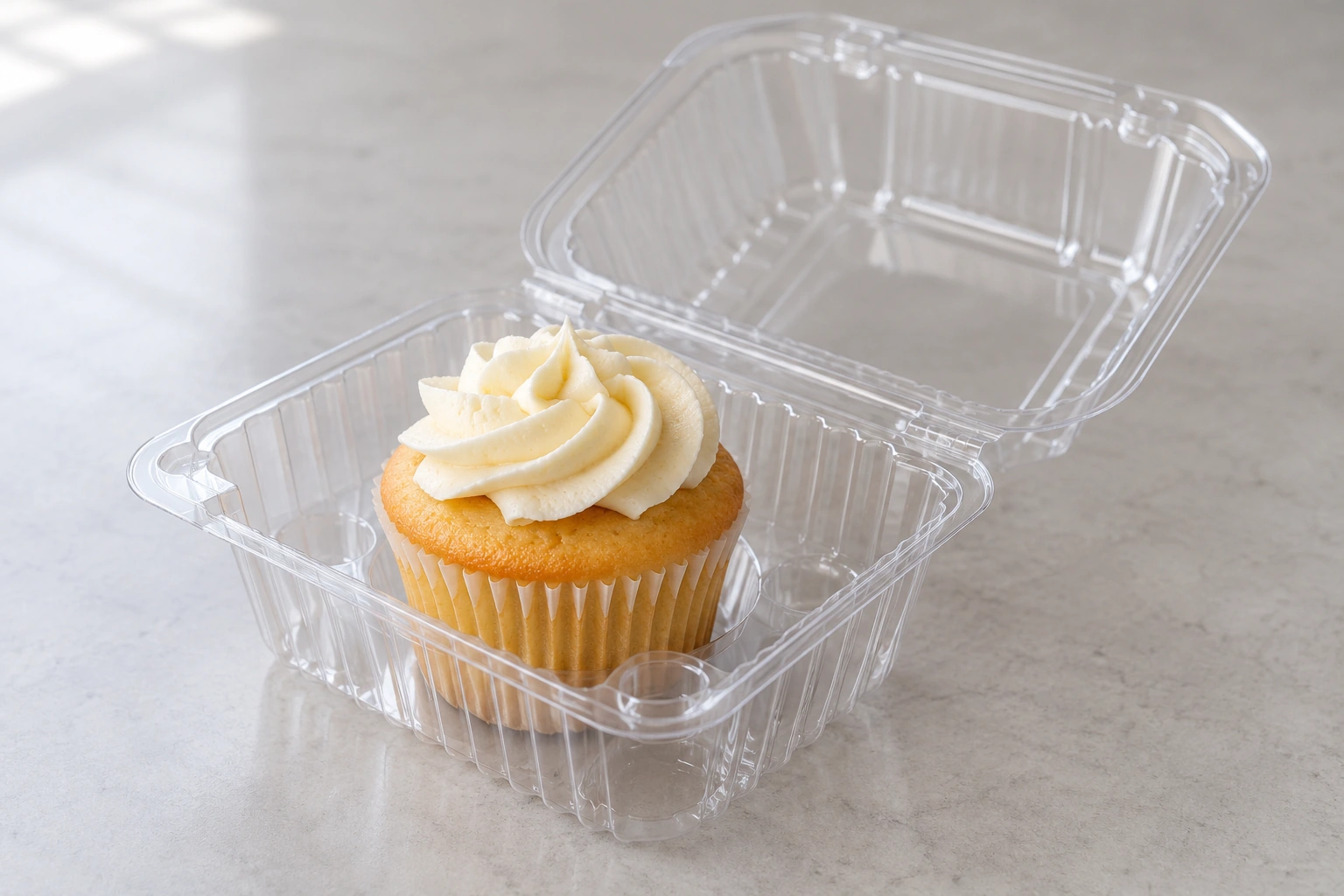
Takeaway packaging needs to be assessed with the bakery product that will actually go inside it. A nominal box size does not explain whether the lid presses a topping, the base supports the portion or the product slides during carrying. External measurements may also differ from the usable space inside.
Start with a product sample and a container sample. Catalogue photographs help narrow the options, but the final decision becomes clearer when the base, product, lid and carrying method are tried together. For routine use, retain the result so the next person does not choose a replacement simply because it looks similar.
Check the base and lid as one pair
Place the product in its intended serving position. Check the usable length and width of the base rather than relying only on the dimensions in a quotation. Rounded corners, recesses and closing features can reduce that space. A portion that fits only when tilted may not come out neatly for the customer.
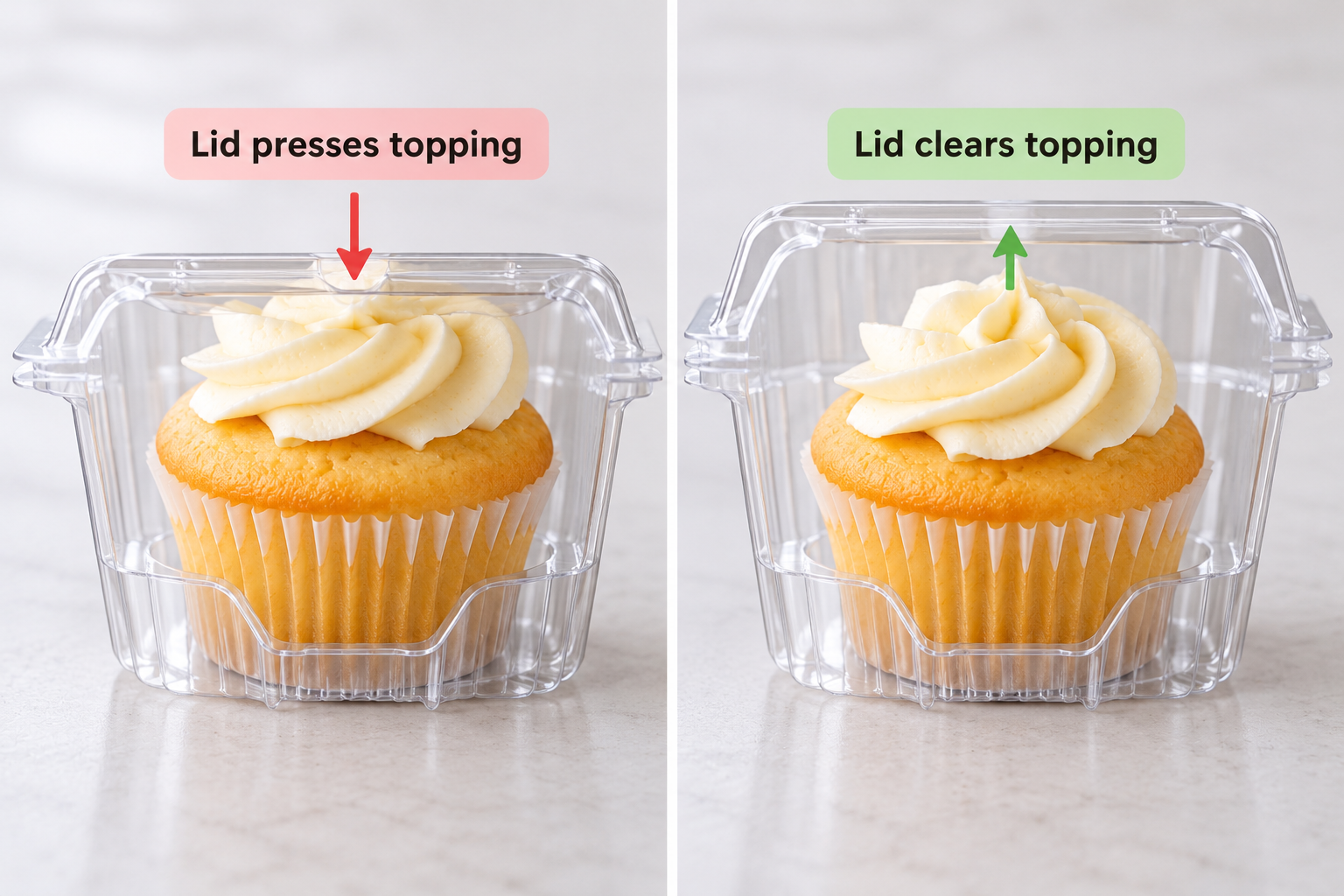
Close the lid gently without pressing the product. Look at the highest topping, decoration or pastry peak. The container should close as intended without using the food to support its lid. Read overhead clearance together with base support: an unnecessarily large box can create too much room for movement.
Ecopaq’s bakery-packaging guidance highlights dimensions, height, weight and testing with the actual product. Use those factors to decide what samples to assess, rather than treating a single container model as suitable for every bakery item.
Record the product shapes that demand most space
If one container is intended for several products, do not test only the smallest. Select examples with different heights, widths and decorations. A container that works for a plain roll may leave insufficient clearance for a portion with a raised topping.
Make a short table showing the item, its position, the part nearest the lid and the closing result. Identify the packaging sample version. If the product later changes shape or size, this record helps show which part of the decision needs to be tested again.
Do not establish fit by compressing the food until it looks acceptable. Test the product in the condition the customer will receive. Include any board or liner that will actually be used, because its thickness can reduce the space above the portion.
Test removal as well as loading
Packaging shapes the experience of opening and eating the bakery product. Ask someone who did not assemble the sample to open it. Do they need to touch the topping to lift the portion? Does the liner come out cleanly, or fold into the food?
Where the portion is lifted with a tray, check that the tray offers a practical place to grip. If the customer eats directly from the container, consider room for utensils and hand movement. Match the arrangement to the food; different bakery products do not all need the same extra accessories.
Record the action that caused difficulty, such as a closure that requires pulling the side of the box. A specific observation is more useful than a judgement such as “not premium enough”, which does not identify what should change.
Define observations that would prevent acceptance: the closed lid touching a topping, the base bending under the portion or removal damaging the product. Two people can then check the same conditions. If their results differ, compare orientation, liners and closing technique before attributing the difference to container manufacture.
Check movement in the actual carrying arrangement
Put the closed container into the intended bag or secondary package. Confirm that it can remain level and is not pressed by other items. Try a reasonable short journey, including lifting and setting down the bag, then open it to check whether the product moved or touched the lid.
This trial cannot guarantee every transport condition. Its purpose is to identify repeatable problems in the intended arrangement. Avoid deliberately overturning the container or applying extreme shaking when that is not representative of how it will be used.
Packaging manufacturer AVI distinguishes bakery footprints and lid-height requirements. Movement still needs to be considered for the particular combination of food, container and carrying method chosen by your team.
Separate dimensional fit from material suitability
A container that fits physically is not automatically appropriate for every food and temperature. Ask the supplier for its intended uses, permitted conditions and handling instructions. A clear or thick-looking container is not evidence that it can be heated.
Check instructions for the lid as well as the base, particularly if they use different materials. Dimensions and a successful fit test do not replace food-contact information or manufacturer instructions. Keep those documents with the sample identity so the decision can be reviewed with its full context.
Keep a decision that procurement can reuse
Summarise the suitable items, product orientation, additional support, secondary packaging and questions awaiting confirmation. Assign responsibility for reviewing a change to either the product or the container. Repeat purchasing can then follow an identified specification rather than someone’s memory of a box colour.
When discussing a takeaway requirement with Asa Group, bring the actual product context and intended carrying arrangement. Connect the packaging decision with product storage and handling so dimensions, material use and movement are considered as related practical needs.