
Growth
Private Label or Wholesale Bakery: Choosing a Supply Model
Compare private-label and wholesale bakery supply through specification readiness, change responsibilities and operating needs.
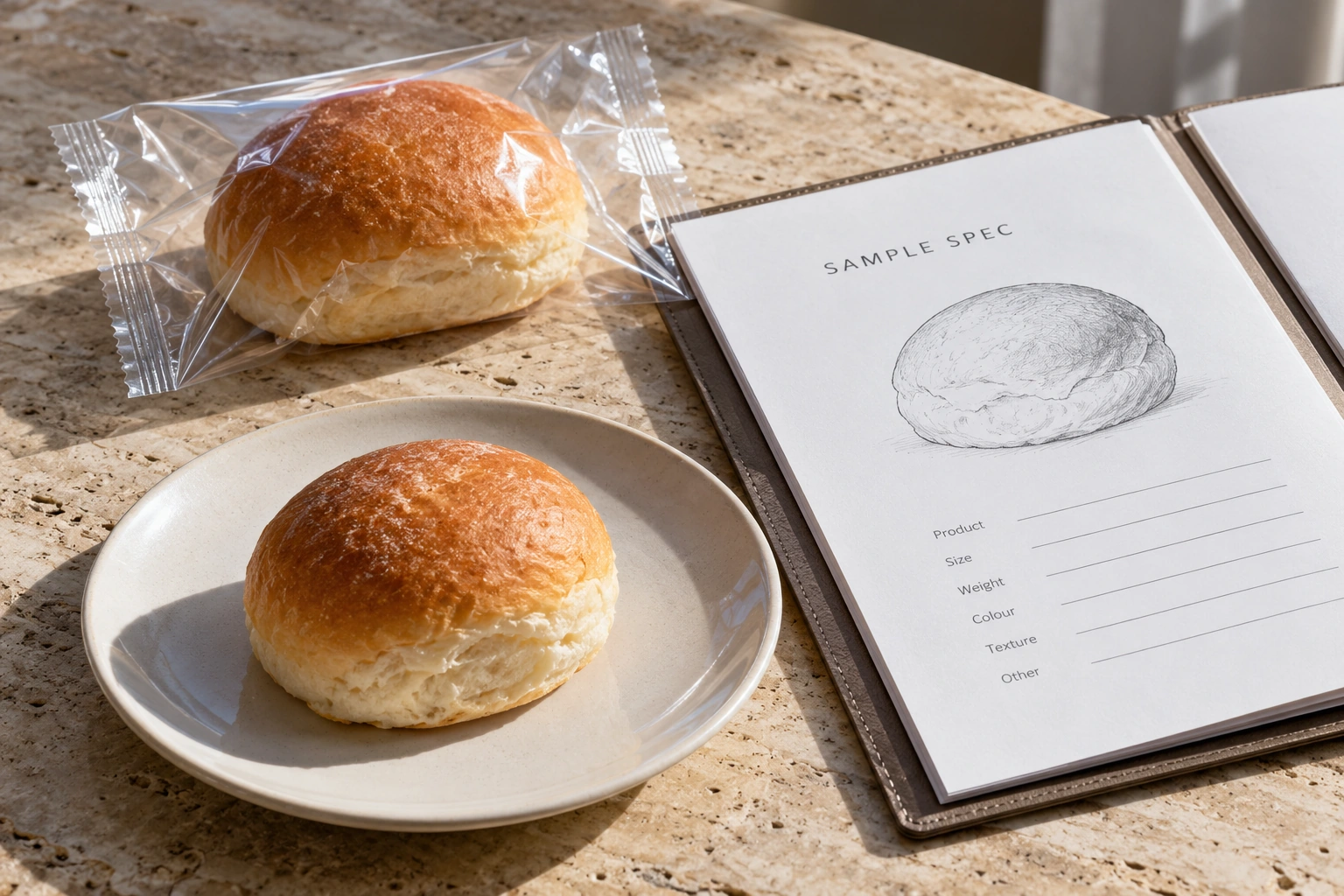
Private-label bakery production and purchasing existing wholesale products answer different supply needs. Buying an available product usually starts with choosing an existing specification. A private-label project becomes relevant when product identity, characteristics or brand requirements need a separate development and production discussion.
Make that choice before requesting a large collection of samples. A requirement such as “a pastry that suits our cafe” does not automatically call for a development project. When size, flavour, packaging and brand use must follow a particular design, an existing product may not answer every part of the brief.
Identify what genuinely needs to differ
Write down why the product must differ from available choices. Does the necessary difference concern the recipe, size, shape, packaging or simply how staff serve it? Separate essential requirements from preferences that can still change.
For example, a fictional cafe needs a pastry with a consistent serving yield for its breakfast menu. If an existing product already suits the required size and service method, changing an internal serving package may not require recipe development. A specific flavour specification, by contrast, calls for a more detailed discussion.
Explain the business reason behind each request. “This size must fit our serving container” is easier to evaluate than “make it slightly smaller”. Packaging dimensions, serving methods and expected usage help a supplier understand which boundaries really matter and where another solution might work.
Compare responsibilities across the two models
| Question | Existing product | Private-label project |
|---|---|---|
| What is selected? | An available product and specification | A specification to be agreed |
| How is suitability assessed? | Test the product against cafe needs | Test samples against project criteria |
| What needs explaining? | Variant, quantity, handling and supply | Development scope, approval and production |
| What if requirements change? | Review available alternatives | Review the effect on the agreement |
This is a discussion framework, not an Asa Group quotation or set of terms. Suppliers can operate differently. Confirm who owns the specification, who approves samples and which elements can change after approval.
Contract manufacturing and private label are not always used with identical scopes. As one example of industry terminology, Dyna Indonesia describes manufacturing and private-label services for bakery ingredients. It does not follow that every supplier offers the same service, process or commercial conditions.
Assess readiness as well as ambition
A development project needs someone able to make decisions. If different people assess each sample without shared criteria, the discussion can repeatedly return to its starting point. Nominate a decision maker and record how the team will judge a sample acceptable.
Check the basis of the demand estimate too. Separate quantities previously used, sales targets and growth expectations. All can inform planning, but they should not be presented as the same kind of evidence when discussing production.
For a business that has not tested a menu, purchasing an available product may help establish demand first, where the supplier’s terms suit the need. Sales records and feedback can then provide concrete input for later development. That is a possible staged approach, not a rule that every business must follow.
Ask about cost and timing within the scope
Do not compare one finished-product price with one private-label figure without examining what each includes. Ask about relevant components such as the product, development, samples, packaging and delivery. A single quoted total does not establish that every possible component is included.
Request clarity about the expected stages and the factors that can change timing. Revisions, material approvals and input availability may be useful discussion points, but actual conditions must come from the supplier. This article does not set minimum order quantities or production lead times.
Bakery suppliers such as CraftMark demonstrate that business supply can involve specific production scopes and capabilities. Use such references to develop questions. Another company’s capabilities do not establish Asa Group’s facilities, processes or available services.
Plan for changes and repeat orders
Before selecting a model, imagine the second order. Will the team still have a record of the chosen variant, accepted specification, package size and service trial? Those records matter even for existing products, so repeat purchasing does not depend entirely on memory.
For private-label work, ask how specification changes are submitted and approved. Separate a new requirement from correction of an outcome that does not meet the agreement. Keep specification versions and sample decisions together so both parties refer to the same accepted basis.
Discuss what happens if a product is unavailable. An alternative should not automatically count as equivalent because it has a similar shape or price. The cafe needs to consider effects on the menu, serving yield, product information and customer communication before accepting a substitution.
Prepare a brief that supports a decision
Summarise the intended use, essential requirements, flexible preferences, estimated quantities and their basis, required timing and decision owner on one page. Include any product trials already completed. The supplier can then discuss suitable models against a concrete operating need.
If development is the appropriate route, continue with the early stages of a private-label patisserie project. To discuss available products or development requirements with Asa Group, bring that brief and confirm the actual service scope and applicable terms.