Procurement
Aligning Bakery Product Names across Orders and Catalogs
Map confirmed product names, outlet aliases, variants and ordering units before preparing bakery purchase orders.
Catalog names and the names used inside an outlet do not always match. Staff may call an item “filled bun A” while the catalog uses a full product name with a specific variant. If that informal wording goes straight into a purchase order, the supplier has to interpret the request. A better approach is to map names before preparing the order: confirmed name, internal alias, variant and unit should have a clear relationship.
Start with one reference list
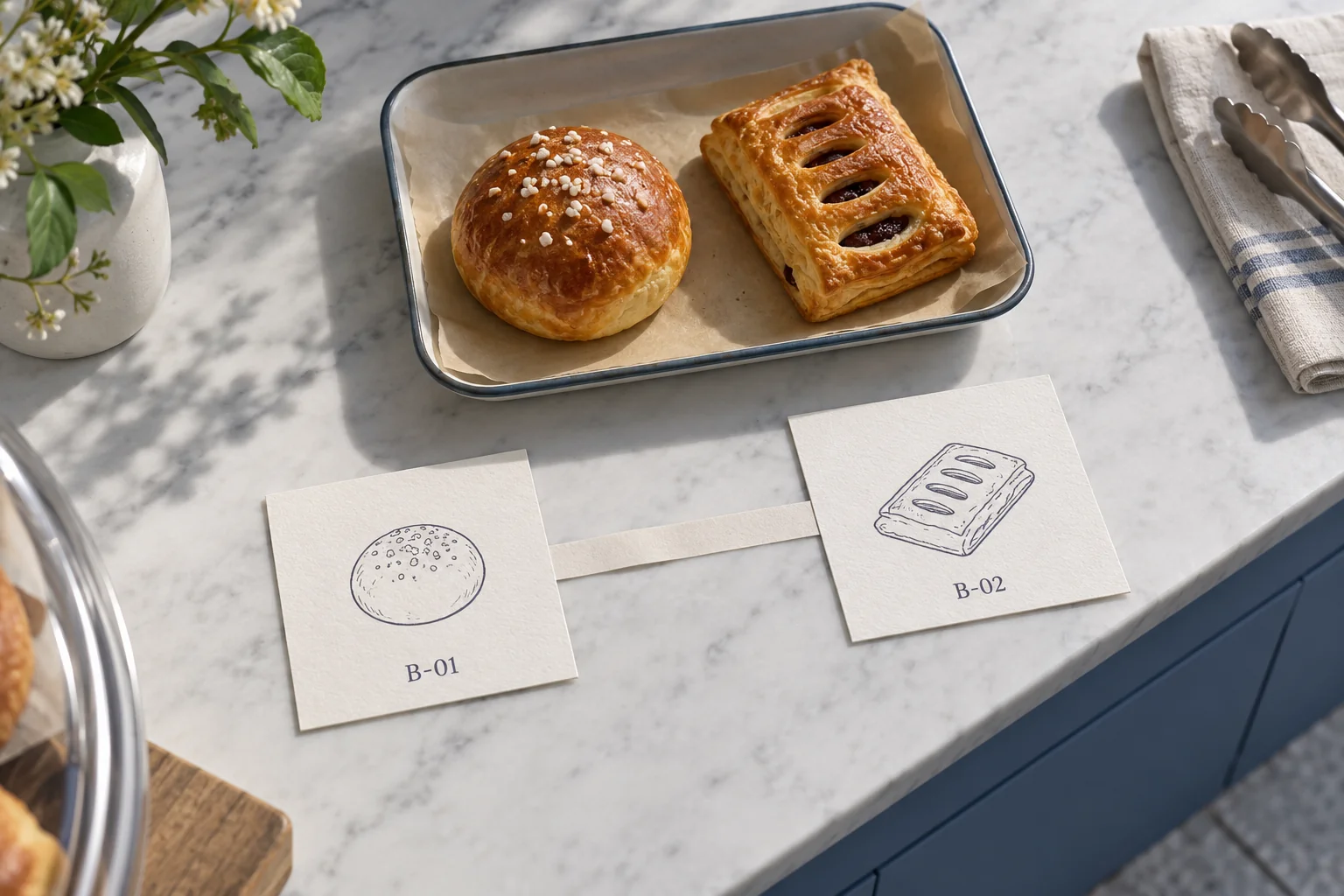
Choose the catalog or product list that is actually being used now. Record who supplied it and when the team began using it. Do not merge old screenshots, short messages and a newer catalog without examining their differences. A photograph can help identify a shape, but it does not replace product identity when two variants look similar.
The reference list does not need an elaborate procurement system. What matters is that the person preparing the purchase order and the person describing outlet requirements use the same version. If a name is uncertain, mark it “needs confirmation” and keep that item out of the final order. Staff do not have to resolve every uncertainty themselves; some questions need a supplier’s answer.
Keep confirmed names and outlet aliases separate
A confirmed name is the name agreed for the transaction. An outlet alias is the convenient expression used during daily work. Keep both if they are helpful, but place them in separate columns. The alias helps staff find an item they recognise; the confirmed name prevents the purchasing request from depending on one location’s habits.
The following table demonstrates a list structure. It is not an Asa Group catalog or a set of actual product codes:
| Internal reference | Confirmed name | Outlet alias | Variant | Unit |
|---|---|---|---|---|
| B-01 | Bakery item A | Meeting bun | Variant A | Confirm first |
| B-02 | Bakery item B | Box bakery item | Variant B | Confirm first |
Unanswered fields remain visible deliberately. Guessing the unit simply moves the uncertainty into the next stage.
Make variant information explicit
Two items can share a product-family name while differing in filling, size or packaging. The name map should preserve differences that matter to the order. Record attributes that have been confirmed rather than inferred from a photograph. If a choice is unavailable or uncertain, do not create a new variant in the list merely because an outlet requested it.
Check whether one alias already refers to multiple items. “Chocolate bun” might describe more than one product. When that happens, change the internal lookup so staff choose a variant instead of entering only a loose alias. Short names remain useful when they retain the necessary distinctions. The business-channel assortment guide provides context for why some choices should remain separate.
Give every quantity a clear unit
A number without a unit is easy to misinterpret. A request for “10” could mean ten individual items, ten packs or another unit relevant to that product. Record the unit used by the reference list and confirm how quantities should appear in the purchase order. Do not infer pack contents from a photograph or from an unrelated product’s ordering convention.
If an outlet records its needs in another unit, keep that as an internal note until the conversion is confirmed. An event requirement might be expressed as a number of people while the transaction uses product units. Both details are useful, but they are not interchangeable without a basis. The name map resolves identity; quantity planning still requires its own discussion.
Apply the map while preparing the order
Find the product through its alias, then copy the confirmed name and variant. Check the quantity and unit in the same row. Do not rely on a note at the bottom of the document to repair an ambiguous product name. In a spreadsheet, keep internal search columns separate from the columns that will be sent to the supplier.
Test a few rows before making the list widely available. Ask a staff member who normally uses aliases to find an item, then ask another person to read the resulting purchase-order row. If they understand it as different products, the map is not ready. This small test is more useful than waiting for ambiguity to surface in a large order.
Update the list with a visible decision history
Assign an owner and a clear way to propose changes. When a name changes, keep the previous wording and the date from which the new name applies. Avoid silently rewriting the list while another person is preparing an order. Send a short notice explaining which rows changed, particularly when the old alias is still circulating in outlet conversations.
Before opening another location, connect the map to the outlet supply preparation guide. Use the Asa Group contact information to confirm product identity and relevant ordering units for business requirements. A name map should make questions and purchase orders more specific. A useful list does not require everyone to memorise every name; it helps them consistently locate the item they actually mean.