
Growth
Testing Bakery Display Clarity without Changing the Products
Test bakery labels from the customer's viewpoint, change one element and compare readability without changing the products.
A bakery display can look orderly to staff behind the counter while remaining confusing to customers in front of it. A tray lip may hide a name, a reflection may cut across the lettering, or two labels may seem to describe the same item. Before replacing products or adding decoration, run a small information-clarity trial. Its purpose is to see whether people can find names and distinguish choices more easily, rather than to establish a sales increase.
Select one question that can be checked
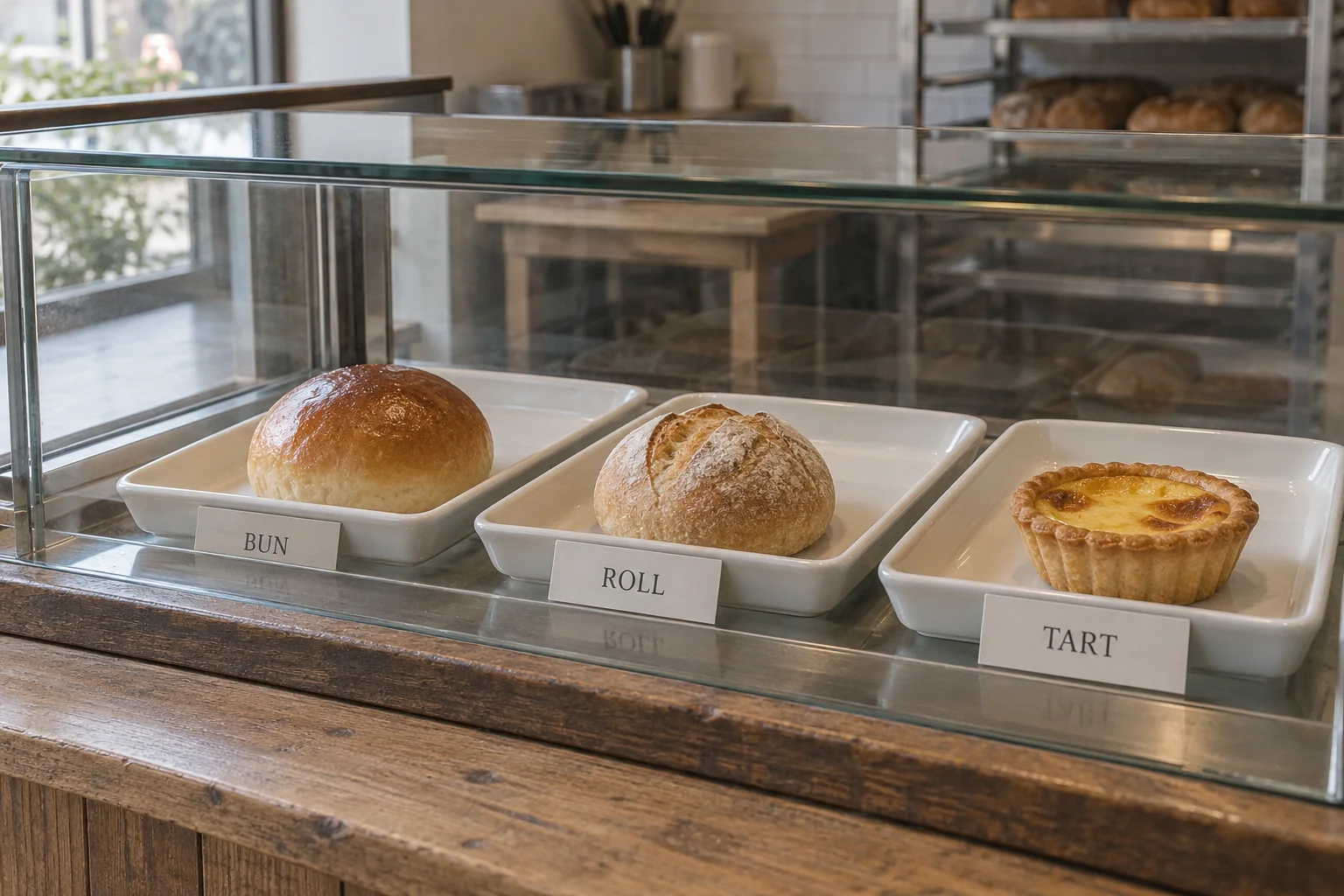
Begin with a concrete question: is the middle tray’s name readable from the queue position? This gives the trial a clear boundary. Do not simultaneously evaluate taste, price, variant selection and room design. If everything changes together, it becomes difficult to understand which change influenced the observation.
Choose one section of the display and record its starting condition. Note the products present, quantities visible, label positions and observation time. Use product information that has been confirmed. A readability trial is not a reason to add ingredient, size or benefit claims that are absent from the reference list.
Also agree on who may move the label and when the trial will take place. If a staff change occurs during observation, pass on a record of the starting position so nobody resets the label unnoticed. This small arrangement keeps the comparison useful while preventing the trial from interfering with ongoing customer service.
Record what is visible from the customer’s position
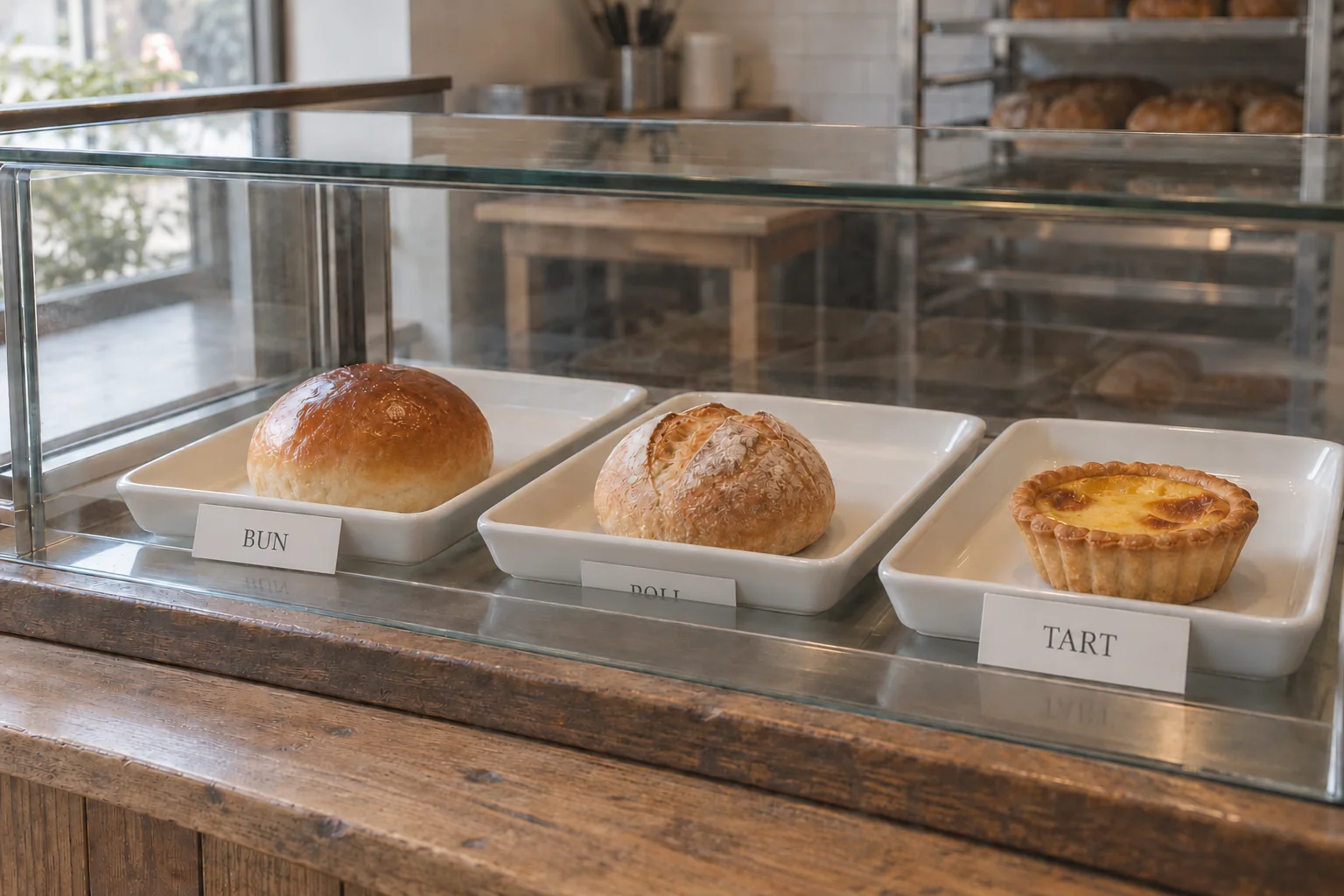
Stand where customers normally look at the choices, rather than only immediately beside the glass. Check whether the label is readable at a reasonable distance, whether a tray obscures part of the wording and whether the label clearly belongs to its product. If the queue has several viewing positions, select one main comparison point and record additional positions separately.
Photograph the starting arrangement with the outlet’s operational permission. Show the relationship between products and labels rather than customer faces. Use a camera angle and height that can be repeated. Reflections that change with sunlight should be recorded because they can affect readability even when the label stays still. A photograph supports memory of the condition being compared; it does not replace direct observation.
Decide how the result will be read
Agree on the observation task before changing anything. For example, ask a colleague to indicate the label for the middle-tray item and explain the difference that is visible in the display information. Avoid giving clues about the desired answer. Record whether the colleague finds the name, requests more explanation or points to another label.
Use the same question for the original and trial arrangements. Someone who has seen the first arrangement may remember the answer when viewing the second. Record that limitation and involve another observer if available. A short outlet trial offers practical decision material; it is not automatically a survey representing all customers.
Change one thing and repeat the observation
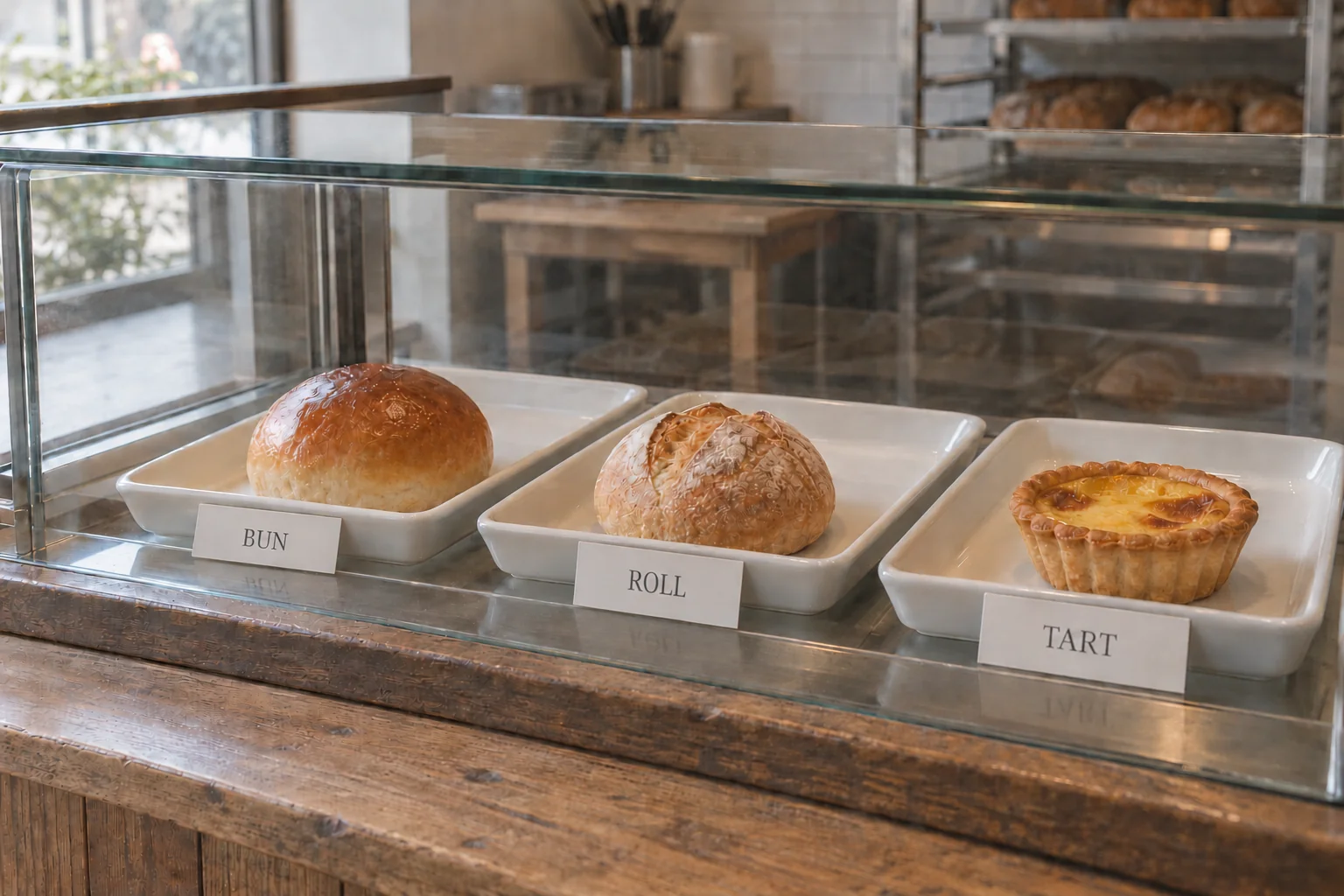
If the label is too low or obscured, move that label so its full name is visible. Keep the products, quantities, tray arrangement and other information as consistent as practical. Avoid moving every item or introducing a strong colour treatment at the same time. A limited change makes the comparison easier to interpret.
Repeat the observation from the same point under comparable lighting. Also check whether the new position interferes with staff access, hides the product or creates a different reflection. A readable label that obstructs work is not necessarily the best solution. Follow the outlet’s product-handling and display procedures; an information trial does not change serving requirements.
Keep a summary that supports a decision
Use a short recap so the result does not remain an unexplained photograph in a group chat:
| Field | What to record |
|---|---|
| Question | Whether the middle tray’s name is readable |
| Change | Label position, with the same information |
| Comparison conditions | Viewpoint, time and lighting |
| Result | What was readable and what remained confusing |
| Decision | Keep, adjust or gather more context |
When the observation is inconclusive, state what is still unknown. Do not call the trial successful simply because the display looks more attractive. Readability and visual preference may be related, but the original question still needs an answer based on what was actually examined.
Connect the trial to feedback and product selection
After choosing a label position, tell staff what changed and why. Ask them to record remaining customer questions using consistent product identities. Avoid immediately changing recipes or the assortment in response to an information problem that has not been resolved. The next evaluation is more useful when the display conditions are understood.
For product-selection discussions, read the business-channel assortment guide. For a new location, use the outlet supply preparation guide. Requirements discussed with Asa Group should include display context and a specific question. A small trial gives the team a clearer vocabulary than simply describing the display as “not good enough”.