
Operations
Bakery Consignment or Wholesale: Keep Stock Ownership Clear
Keep purchased bakery stock and consigned goods distinct through supplier identities, receipt records, sales, remaining quantities and agreed settlement terms.
Bakery products on the same shelf do not necessarily have the same ownership status. Purchased goods and consigned goods need to be distinguished from receipt onwards, so physical quantities, sales and supplier settlement do not become mixed. Similar product names do not remove the need to follow the agreed commercial arrangement.
In an ordinary purchase, the business buys products under its purchasing terms. Under consignment, goods are placed for sale with a particular ownership and settlement arrangement. A casual instruction to “leave them here for now” does not define every condition. Establish the intended arrangement before the goods enter the sales process.
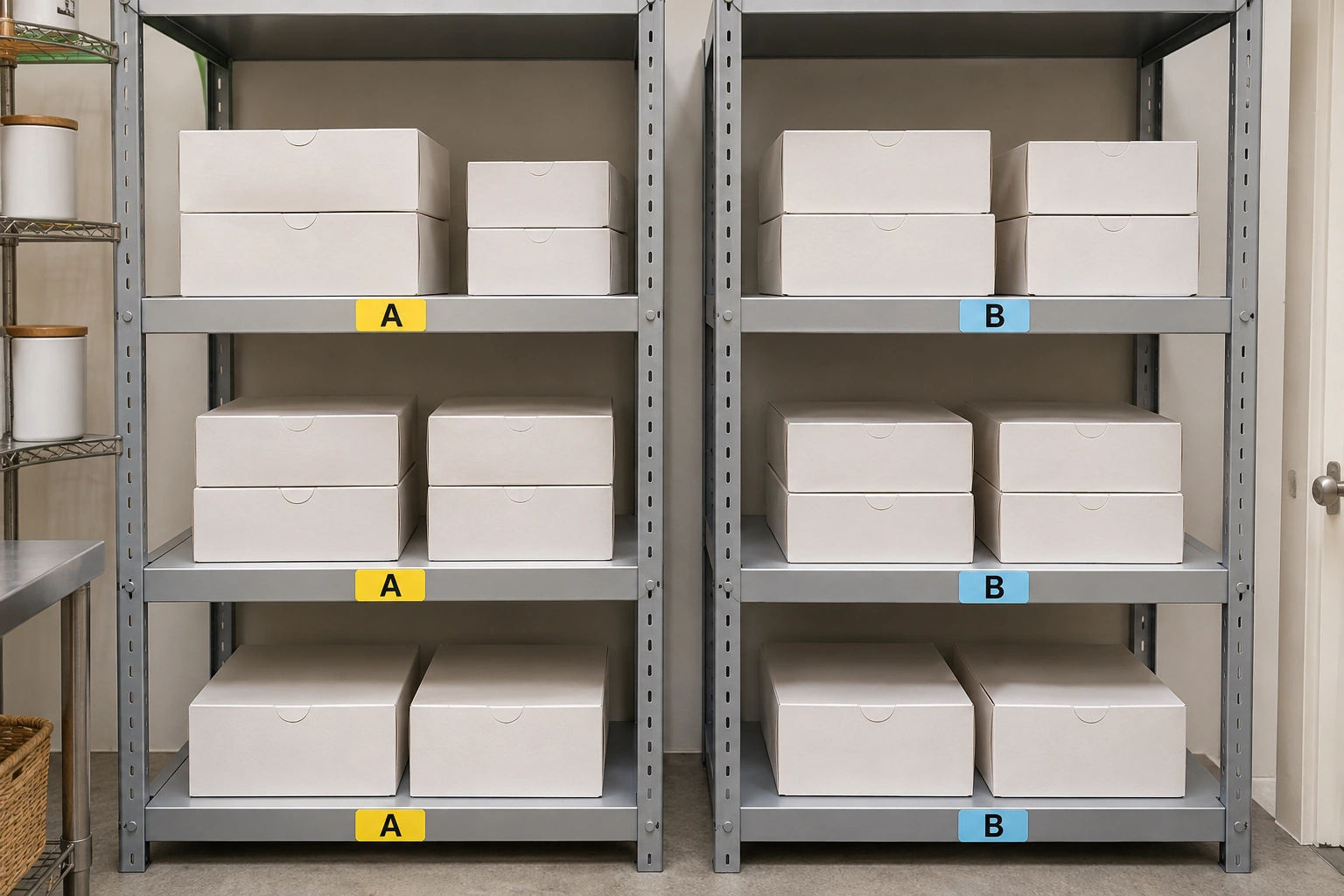
Record the arrangement before receiving stock
Identify the supplier, product, unit, quantity, period and stock status. Add the basis for settlement: the full purchased quantity, or actual sales under the consignment agreement. Connect the record to a document or summary accepted by both parties.
Do not infer the arrangement from payment timing alone. Paying later does not automatically make a delivery consignment, and placing goods inside an outlet does not itself establish outlet ownership. Receiving staff should be given confirmed information instead of being expected to interpret commercial language themselves.
Shopify’s explanation of consignment emphasizes distinguishing consigned goods from owned inventory. Use that separation as an operational principle. The detailed allocation of responsibilities still needs to be read from the business agreement rather than assumed from a general definition.
Keep two sets of records even when shelves are close
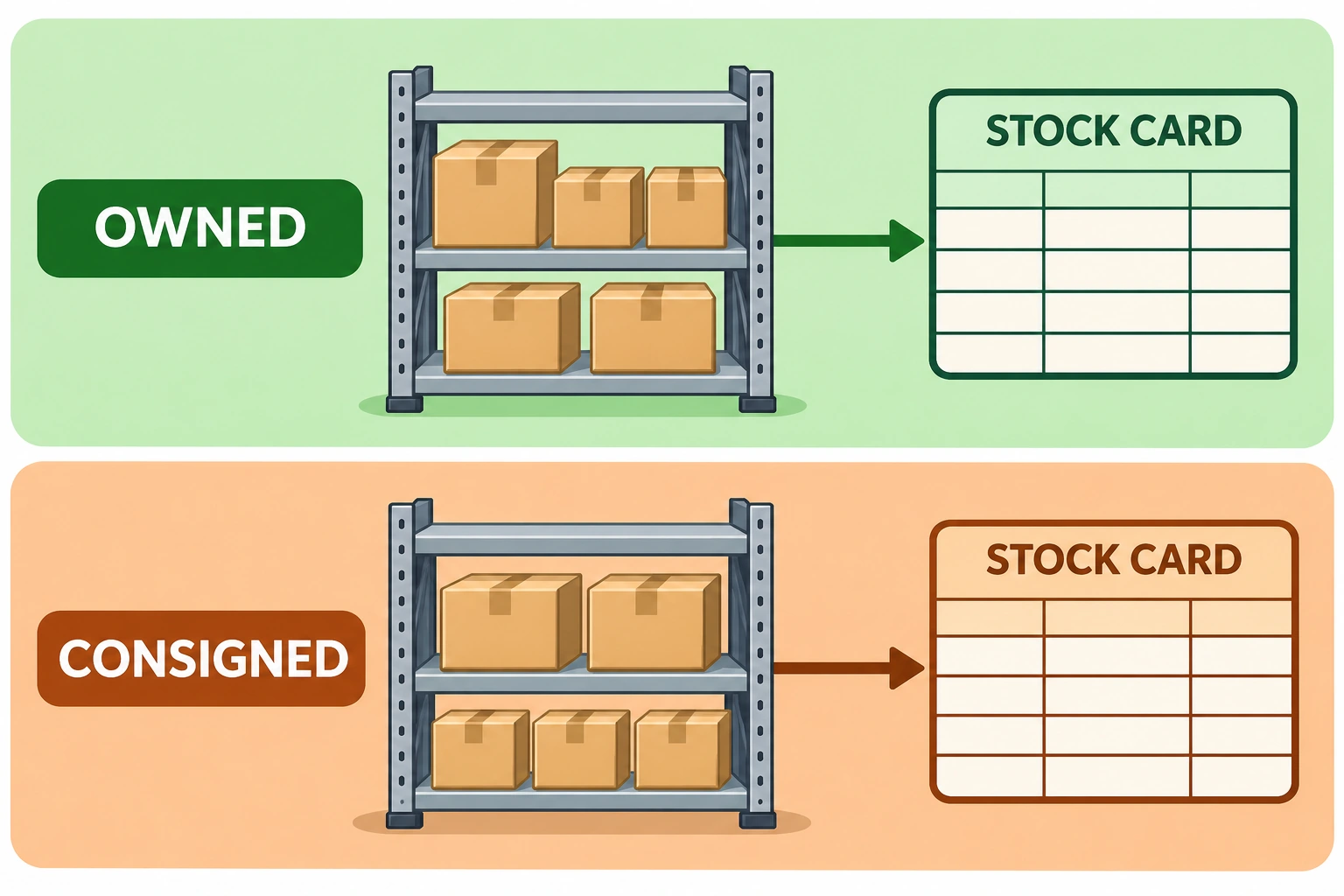
Use markers that staff can recognize in both the stock list and the storage location. For example, group A might represent purchased products and group B a particular consignment. Those letters are only examples. Every staff member needs to understand the chosen identifiers and use them consistently.
If the same product name exists under two arrangements, assign distinct internal identities. Do not rely on the cashier remembering packaging colours. The identity can connect supplier, variant, unit, available lot information and procurement status. An internal marker does not replace food labelling or product information.
Separate records do not necessarily require separate rooms. Storage still follows the product’s handling requirements. The essential point is traceability: staff should be able to explain where goods came from and their status without borrowing quantities from another stock group.
Follow movements rather than the closing balance alone
For each group, record receipts, sales, returns, transfers and the remaining physical quantity. Give every movement a date and a clear destination. Keep units consistent so a box is not sometimes counted as one item and sometimes as several individual pieces.
Consider a practice example: 30 consigned boxes arrive, 18 sell, two are returned under the agreement, and ten remain at the outlet. The quantities reconcile because 30 minus 18 minus two equals ten. This checks physical movements; it does not by itself calculate the settlement amount.
If the physical count is nine, record the one-box difference as an open question. Check unrecorded transactions, unit mistakes, transfers and returns. Do not close the discrepancy by inventing a sale or taking one unit from purchased stock. Keep the original figures and document the eventual explanation.
Identify products that look alike
Imagine an outlet selling chocolate bread from two suppliers in similar packaging. One group is purchased normally; the other follows an agreed consignment arrangement. If the cashier selects only “chocolate bread”, the sales record cannot show which group decreased. Distinguish the sales choices or linked records before that ambiguity develops.
The identifier also needs to follow goods from storage to display. Assign responsibility for recording the movement and make it readable to replacement staff. If the system cannot separate the groups, use a temporary list connected to actual transactions rather than relying only on shelf colours. Discuss that limitation before increasing volume. A simple, consistently maintained record is more useful than elaborate fields that staff never complete.
Separate unsold goods from problem stock
Goods that have not sold, damaged goods and goods that must not be sold represent different conditions. Combining everything into a single “return” column hides information. Each condition may need different handling and confirmation under the product requirements and agreement.
Record the condition, discovery time, goods identity, temporary action and contact person. Do not assume withdrawal, replacement or responsibility rules simply because the arrangement is called consignment. Stock requiring separation from sale still follows the applicable handling process.
Close the period with traceable quantities
Before settlement, reconcile the opening balance, receipts, movements and closing balance against supporting records. The KasGo F&B consignment guide shows separate receipt, sales and settlement steps. A manual record can preserve those relationships without copying the application’s complete workflow.
Keep product and supplier details rather than only a cash total. Identify confirmed periods and unresolved questions. If the arrangement changes to an ordinary purchase, establish the date and quantity changing status. This preserves the meaning of the earlier balance and avoids silently rewriting its history.
When discussing procurement with Asa Group, explain the intended transaction model and ask which terms are actually available. This guide organizes those questions rather than stating that a particular arrangement is offered. For a different procurement decision, see the guide to contract manufacturing or buying finished bakery products.