
Procurement
Pieces, Packs and Cartons: Aligning Units on a Bakery Purchase Order
Align pieces, packs and cartons on a bakery PO through SKU-specific conversion factors, worked quantities and receiving checks.
A bakery purchase order should state an agreed unit for every SKU. “Twelve” is not a complete quantity: twelve pieces, twelve packs and twelve cartons may represent very different orders. Start with a base unit, record the contents of each packaging level, and make the conversion visible on the order line.
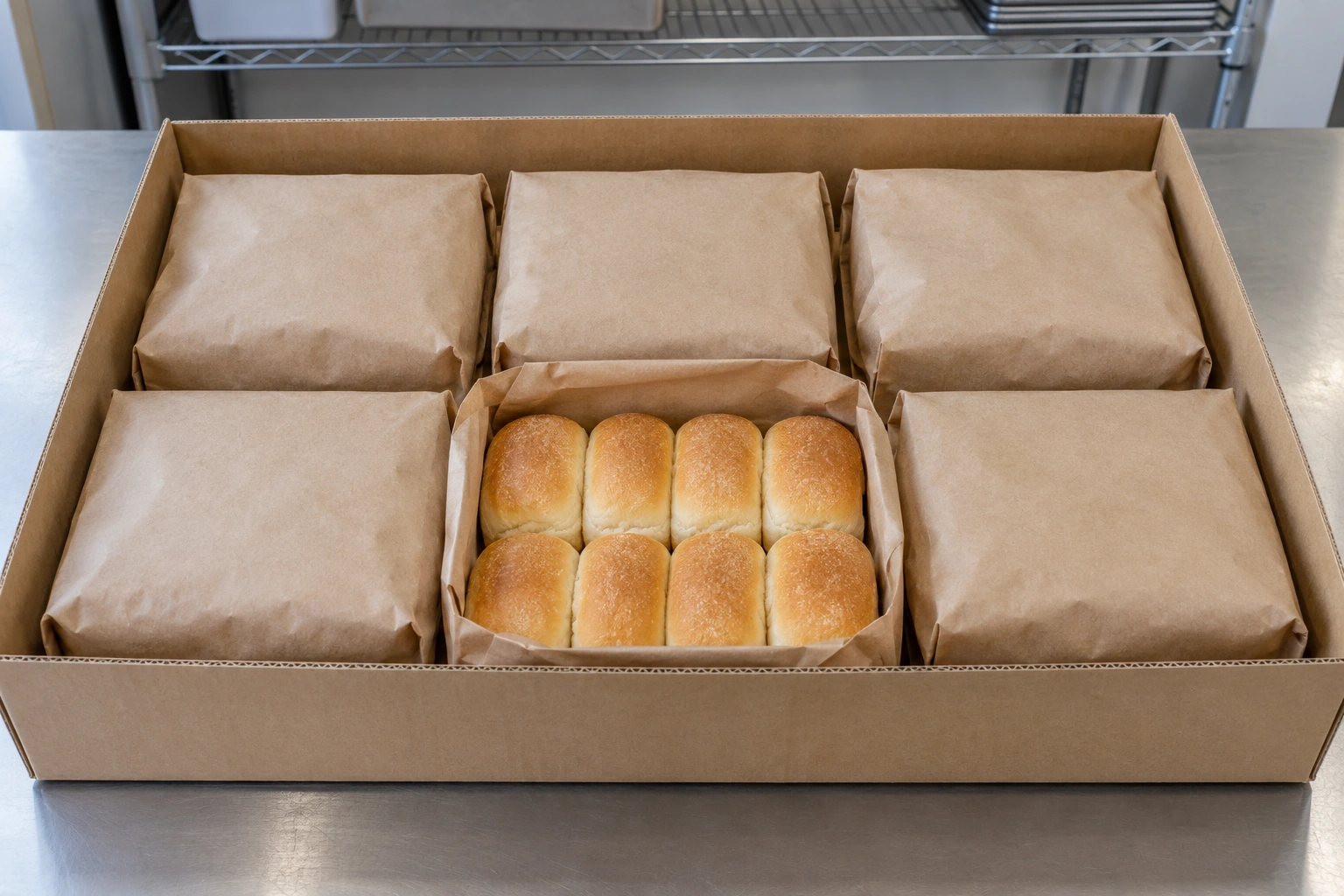
This is a separate task from aligning product names. The correct name identifies the item; the unit conversion explains how much of it is being requested. Both need to be clear before confirmation. Similar-looking cartons are not evidence that two products have the same pack size.
Convert one SKU into a base unit
Work with one product and one variant first. In this example, a pack contains eight pieces and a carton contains six packs. One carton therefore contains 48 pieces. These are teaching figures, not an Asa Group packaging specification; actual contents follow the agreed SKU information.
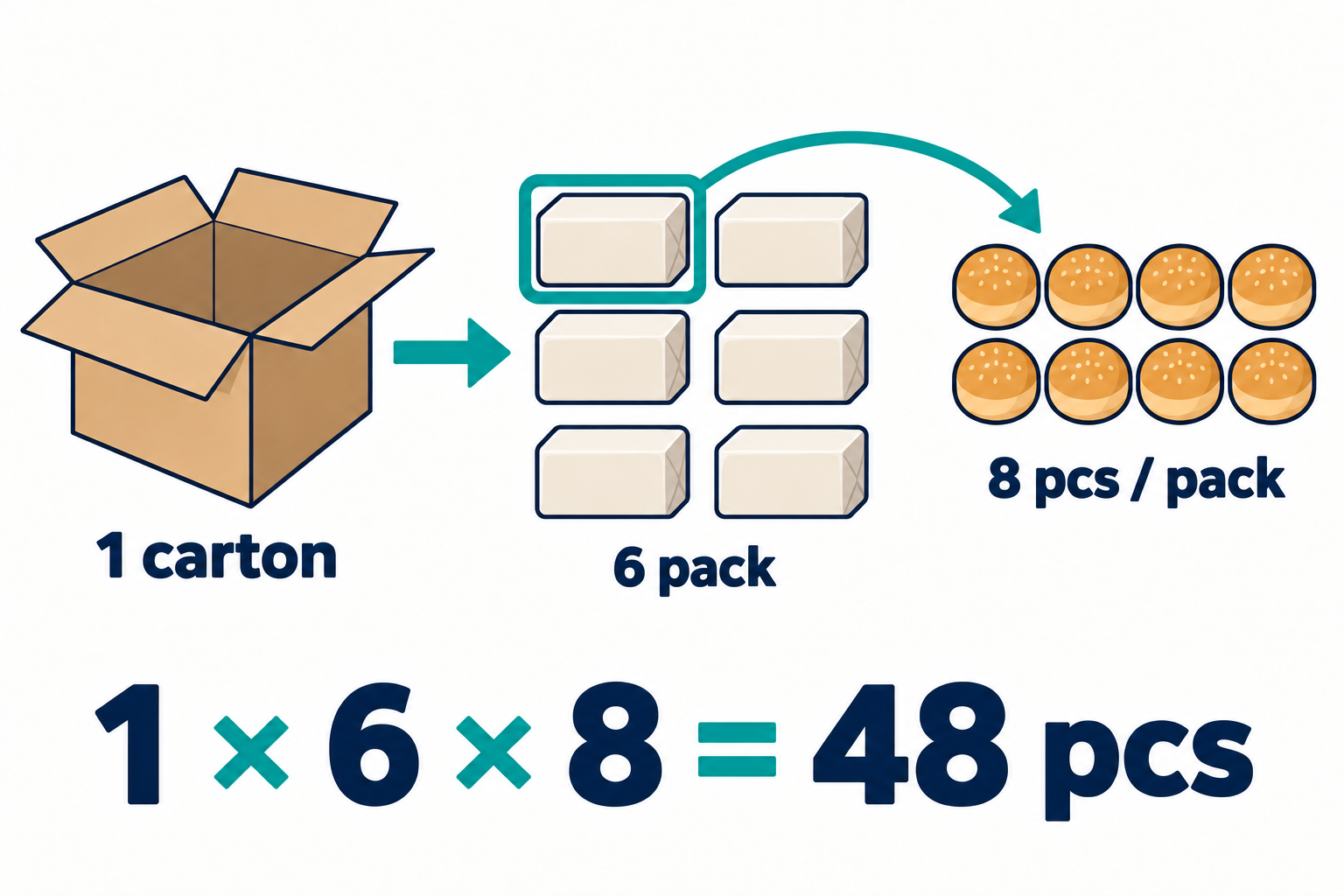
Pieces make a useful base unit when the product is counted individually. A product sold by weight needs a suitable weight-based definition instead. Keep unit count separate from net weight, shipping weight and the number of portions produced after cutting.
| Field | Example value | Meaning for the order |
|---|---|---|
| Base unit | piece | One product counted individually |
| Contents of a pack | 8 pieces | This SKU’s inner-pack conversion factor |
| Contents of a carton | 6 packs | The agreed outer packaging level |
| Pieces per carton | 48 pieces | Six multiplied by eight, not added |
| Ordered quantity | 3 cartons | The number of outer packages requested |
| Base-unit total | 144 pieces | The receiving team can check this result |
Keep those factors in a readable product record. They should not depend on one colleague remembering how a supplier packs an item. Someone covering a shift should be able to follow the same calculation without reconstructing it from old messages.
Separate demand from packaging multiples
Suppose an outlet needs 100 pieces and the supplier offers whole cartons of 48. Dividing 100 by 48 gives more than two cartons. Three cartons would provide 144 pieces, but that arithmetic does not automatically make buying three the right decision.
Check whether ordering individual packs is available, whether the additional stock can be used, and whether suitable storage space is ready. Do not assume that a supplier accepts broken cartons. Do not substitute another variant simply to make the numbers fit.
Record both operational demand and the approved purchase quantity. The difference then remains a visible decision about packaging multiples, rather than an unexplained surplus discovered when the delivery arrives.
Give every number its unit
A useful PO line includes the product identity, variant, ordered quantity, order unit, packaging contents and base-unit total. Avoid a note such as “3 × 6 × 8” without labels explaining the sequence.
“3 cartons; 6 packs/carton; 8 pieces/pack; total 144 pieces” is easier to follow. The receiving team can move from the outer package to the individual item without interpreting an unlabeled multiplication. Use the same unit names throughout the documents.
Prices require units too. A price per pack cannot be compared directly with a price per piece. Convert to a common basis before comparing, then review other costs actually stated in the quotation. Quantity conversion does not establish a discount or a delivery charge.
Review changes to pack contents
Packaging factors may change when a product format changes. Keep the effective date and the confirmation source. If old and new cartons are both in circulation, distinguish them on the receiving record instead of silently replacing the old factor.
For example, two deliveries may share a product name while one carton contains six packs and another contains five. The same number of cartons no longer represents the same piece count. Confirm the SKU and delivery being discussed before updating the record.
Supplier practices differ. Bake Crafters’ ordering information shows that packaging levels and order minimums form part of supplier terms. Its rules are not Asa Group’s rules; use the confirmation that applies to your own supply arrangement.
Close the loop at receiving
Prepare the receiving team with the same units used on the PO. If stock is checked by pack, compare the pack count and stated contents first, then connect that result to the carton quantity. Describe discrepancies specifically instead of recording only “quantity short”.
Before sending the order, ask another person to read one example line and calculate its base-unit total. This small check can expose reversed factors, mismatched price units and rounding decisions that have not yet been approved.
For the product-identity step, see aligning product names in orders and catalogues. When discussing supply with Asa Group, bring the required quantity, order unit and confirmed pack contents so everyone starts from the same numbers.