
Operations
Returnable Bakery Containers: Recording Issue and Return
Reusable bakery crates need a record of their own. All the bread in a delivery may have been received while some empty containers remain at an outlet. Combining those two.
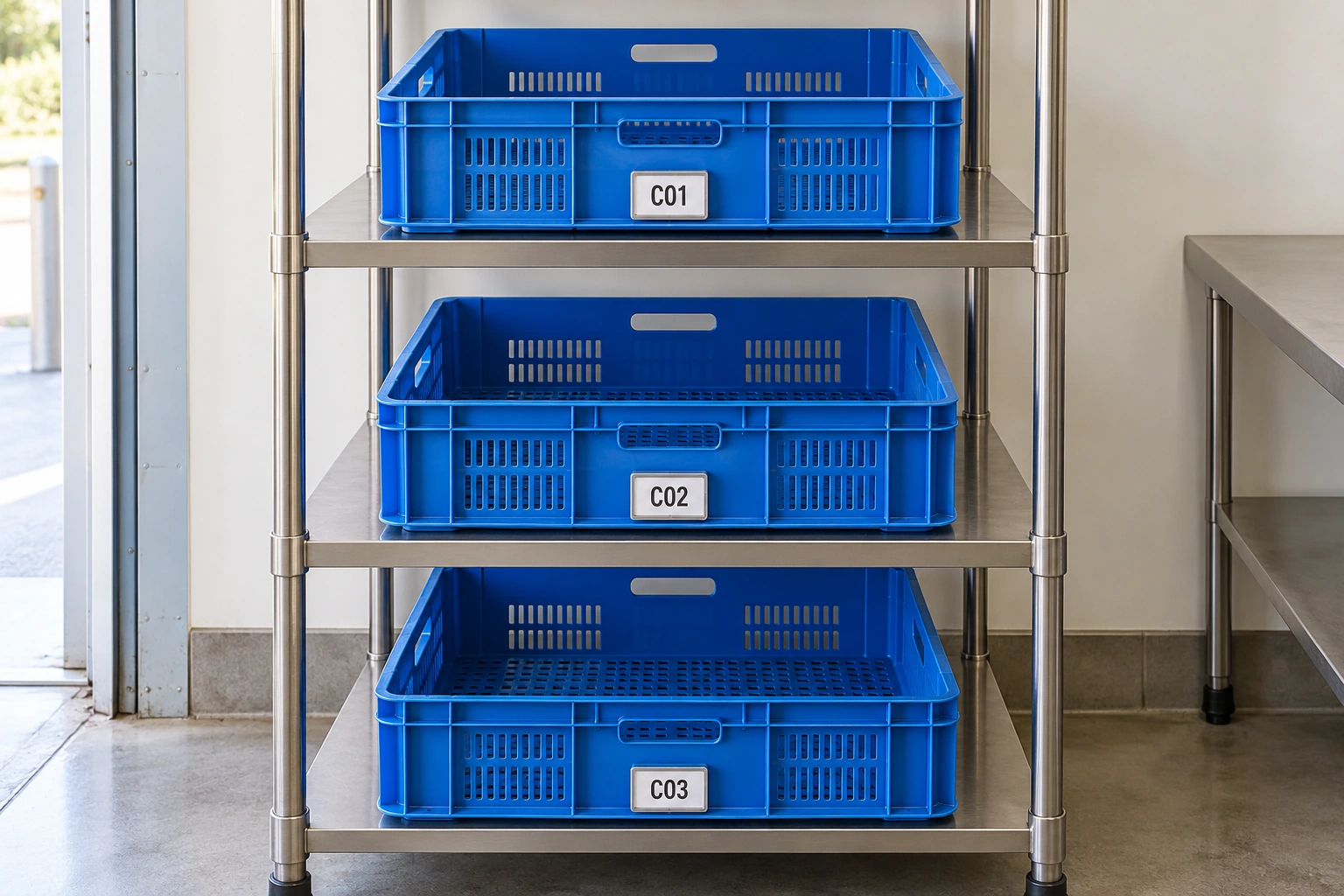
Reusable bakery crates need a record of their own. All the bread in a delivery may have been received while some empty containers remain at an outlet. Combining those two facts in one count leaves the next person uncertain whether the unfinished item is a product delivery or the return of a container.
Use this approach where the parties have actually agreed to use returnable packaging. Establish who owns the containers, who receives them and how they come back. A particular box or tray does not automatically create a loan or a return obligation simply because it was used for a bakery order.
Keep container records separate from product counts
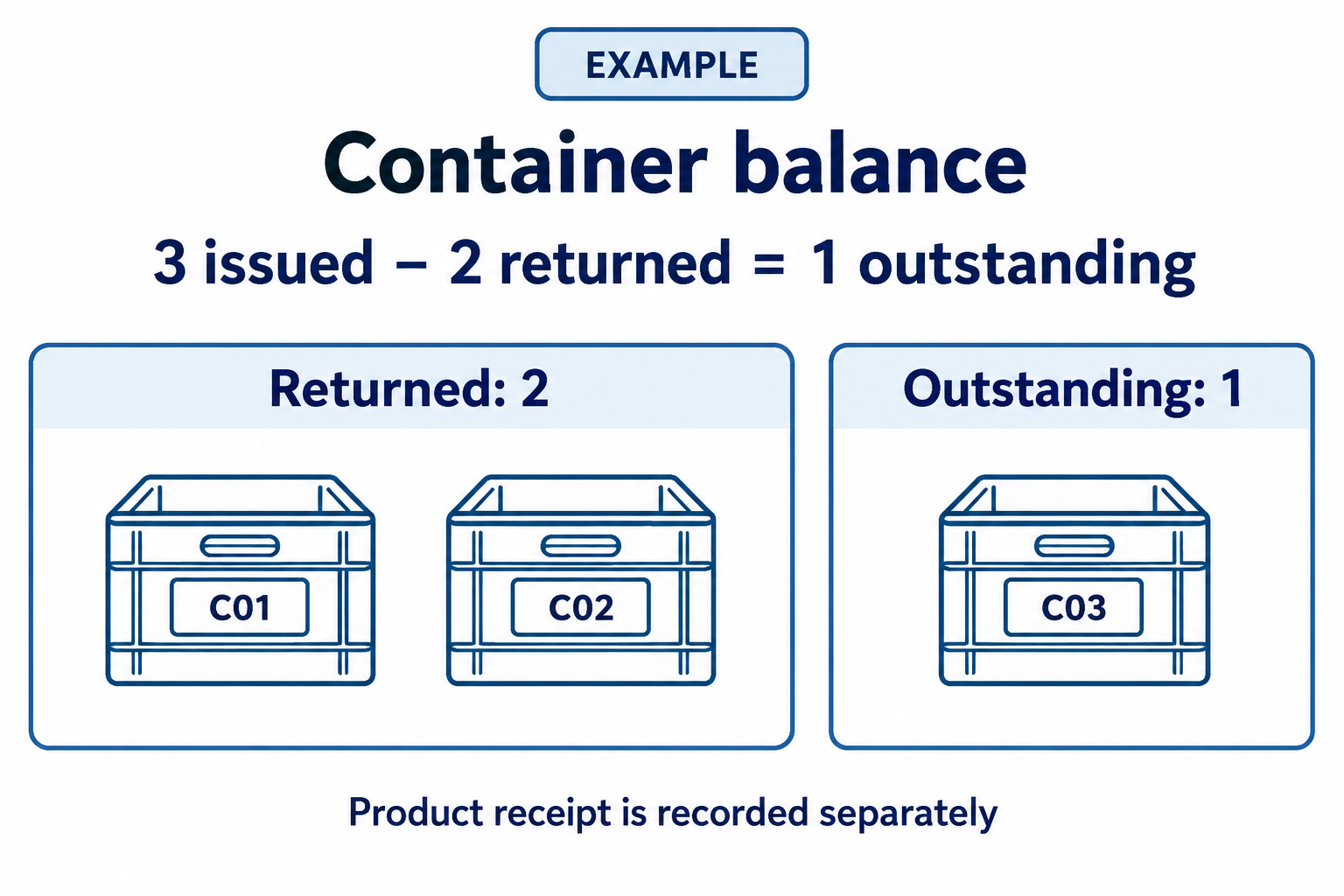
Consider a delivery arriving in three crates. Two empty crates are collected on the next visit, while one stays with the recipient. The outstanding container balance is one. Returning the two empties does not reduce the quantity of bakery products already received.
Maintain separate product and container sections. Product records follow the agreed item, ordering unit, quantity and receipt. Container records follow the container type, individual identity where available, quantities issued and returned, and the last known location. A delivery reference can connect the sections without mixing their units.
| Section | Example information |
|---|---|
| Products | Items and quantities received |
| Containers | Three crates handed over |
| Returns | Two crates received back |
| Container balance | One crate remains at the outlet |
This distinction also helps when an order arrives in several deliveries. Each product receipt can be checked against its order, while the containers continue to move through their own return cycle.
Agree an identity people can read in practice
Not every operation needs a unique number on every crate. Individual identification becomes more useful when containers are valuable, look alike or circulate across several locations. If the system counts by type instead, define those types consistently so a large crate cannot be exchanged on paper for a small tray.
Choose markings that remain readable without interfering with function or hygiene. Do not attach an improvised label to a food-contact surface. Follow the owner and manufacturer’s instructions for identification and cleaning. IFCO describes reusable packaging for bakery supply chains, including identification options; one provider’s features do not mean every partner uses the same system.
Record ownership as well. Similar colours do not establish that containers belong to the same business. Where identity is uncertain, mark the item for confirmation and keep it separate from returns that have already been matched.
Record the handover when the container moves
A useful transaction row identifies the date, originating and receiving locations, container type or number, quantity and person confirming the movement. A delivery-note number can provide a link, but the record should survive a change of driver or receiving shift.
When a visit both delivers full containers and collects empties, record two movements. A net figure hides what happened. If four crates arrive and three empty ones leave, writing only “balance increased by one” cannot explain which containers moved or help trace damage to a particular unit.
Recording returns during the delivery visit also appears in DSD Assist’s container-tracking example. A small team can follow the underlying principle with a clear ledger before considering specialised software.
Separate balance, condition and readiness for use
A returned container is not automatically ready to hold products again. Record the quantity received, visible condition and handling status separately. A cracked crate, missing lid or unreadable identifier needs a different response from a container that has not yet come back.
Do not mark a container clean just because it is empty. Cleaning and inspection follow the actual operation and relevant instructions. Keep containers awaiting handling in their designated area, so an inventory count does not accidentally become permission to put them back into service.
Where there is a condition discrepancy, use a short description and a relevant photograph. Establish the handover history before assigning responsibility for the damage. A condition observation and a conclusion about its cause are different records.
Reconcile balances with the people holding containers
Choose a review interval that fits the delivery pattern. Show the opening balance, issues, returns, approved adjustments and closing balance. Keep earlier movements rather than deleting them to make the final number agree.
In a simple spreadsheet, calculate opening balance plus issues minus returns. If the result is negative, check dates, locations and duplicate entries. Do not immediately replace it with zero: a return may relate to an opening balance that was never entered. Establish those connections before concluding that a container is missing, and explain any correction so another person can follow it.
Review containers that have remained against one location for an unusually long time. Ask whether they are still in use, have moved elsewhere or were returned without being recorded. Link each answer to evidence or a responsible contact. An administrative adjustment should remain visible as an adjustment, rather than pretending that a physical movement took place.
For a bakery supply discussion with Asa Group, first confirm the packaging and responsibilities actually included in the arrangement. Connect container records with matching delivery notes to bakery orders so product receipt stays clear while containers retain their own balance and follow-up.